


**5th Generation Prelude Honda Press Release**
 10-16-2007, 11:24 PM
#1
Honda-Tech Member
Thread Starter

Join Date: Oct 2003
Location: Chicago
Posts: 6,619
Likes: 0
Received 0 Likes
on
0 Posts
 **5th Generation Prelude Honda Press Release**
Everything you wanted to know about your 5th Gen Prelude and more. 
http://corporate.honda.com/pre...01322
__________
Honda Prelude -- Introduction
OVERVIEW
Designed to be an aggressive sports coupe with superior handling, the Prelude is intended to appeal to drivers who will appreciate its high level of performance and refinement. Specific areas of improvement include enhanced handling, greater technical sophistication, more storage and utility and enhanced safety.
The Prelude is available in two models: Prelude and Prelude Type SH. Both use the same 195-hp (190 hp on A/T model) DOHC VTEC engine with Honda-designed variable valve timing.
The Prelude Type SH also features an innovative Active Torque Transfer System that enhances handling precision.
SPORTS-COUPE STYLING
Stylistically, this latest Prelude is a classic coupe, with separate engine, passenger and cargo areas. The car's strongly raked character line and 16-inch wheels give it an aggressive stance. The front end features large, distinctive free-form reflector headlights. They have greater light output, beam width and range and also serve to distinguish the Prelude from other cars on the road. A power-operated moonroof is standard, as are alloy wheels. The Type SH version also adds a rear spoiler.
ROOM
The interior is comfortable and exhibits typical Honda attention to ergonomic details. Large, easy-to-read analog gauges sit in a pod, directly in front of the driver.
A locking, full fold-down rear seatback increases the Prelude's cargo-carrying capacity and utility.
AFB SOUND SYSTEM
An innovative acoustic feedback stereo system actually samples the speaker output and corrects for distortion. The result is improved music response at all frequencies and listening levels. The system is exclusive to Prelude in its class.
SECURITY SYSTEM
An Immobilizer security system with a special key incorporating a digital security code greatly reduces the likelihood of the Prelude being driven away by a thief.
The Prelude VTEC engine has extensive noise and vibration countermeasures in the exhaust and intake system, engine stiffeners, a cast-aluminum oil pan and internal components.
TRANSMISSIONS
4-speed automatic transmission with a Sequential SportShift is available for the Prelude. Sequential SportShift allows the driver to shift up and down through the gears sequentially, like a racing car gearbox.
ACTIVE TORQUE TRANSFER SYSTEM
An innovative, Honda-developed handling system called Active Torque Transfer System (ATIS) is standard on the Prelude Type SH. This system actually redistributes power to the drive wheels, thereby altering the Prelude's yaw (turning) rate. The result is responsive, neutral handling characteristics when cornering.
___
Honda Prelude -- Chassis
OVERVIEW
Perhaps no area of performance defines a driver's car more than its suspension system. Knowing this, Honda engineers redesigned the Prelude's already capable 4-wheel double wishbone suspension system so that it offers even more responsive handling, even greater stability and improved ride quality over its predecessor (the Prelude already enjoyed a reputation as one of the best-handling cars in its class).
PRELUDE 4-WHEEL DOUBLE WISHBONE SUSPENSION
The Prelude uses the latest version of the Honda-designed 4-wheel double wishbone suspension system. Four-wheel double wishbone suspension offers several ride-and-handling advantages over the more-common strut-type independent systems used on many sports cars. In terms of ride, double wishbone suspension offers long wheel travel and low vibration. This is possible because double wishbone uses a separate linkage system to locate the wheels. By contrast, strut-type systems use the damper as a link. Inevitably, there is some "stiction" and binding in the damper when under load and, as a result, a greater degree of road vibration and harshness are transmitted to the body. On double wishbone suspension, Honda engineers can tailor the springs and damper assemblies for ride because the wishbone linkages provide the load path for suspension forces.
Double wishbone suspension also offers several handling advantages as well. Notable among them is its precise control of wheel geometry (hence its almost universal use on high-performance and racing cars). Honda engineers have taken advantage of this trait and tailored the Prelude chassis's roll centers, track, wheel offset, caster and camber in order to give it more linear handling characteristics and better feedback to the driver. The front and rear suspension geometry is designed to minimize front-end dive during braking and squat under acceleration.
Another advantage offered by the Prelude's 4-wheel double wishbone suspension is better outward visibility. Since there are no tall strut towers that would necessitate a high hoodline and cowl, the Prelude has better forward visibility. An advantage, when parking and making tight turns.
Physically, the system consists of two transverse arms (upper and lower) at each wheel. The arms are hinged at their outboard ends to the wheel-hub/upright assembly, and also hinged at their inboard ends to reinforced pickup points on the body. The upper and lower link's inner and outer hinge points form a parallel linkage. Often one, or both, of these transverse links is triangulated, in the interest of increasing its rigidity (hence the wishbone name). On the Prelude, the upper transverse link is wishbone-shaped. The bottom link is a single forged beam, slightly longer than the upper link so that it keeps the outside wheel at the optimum camber angle when cornering. A longitudinal link (leading link) connects each wheel's lower transverse link to the body and provides fore-aft location. A large elastomeric bushing on the forward end of the leading link helps absorb impact harshness from sharp bumps.
BODY RIGIDITY
One characteristic that distinguishes superior-handling automobiles from their lesser counterparts is a rigid chassis, or body in the case of a unit-body vehicle such as the Prelude. A vehicle with less-than-adequate chassis rigidity acts as an undamped spring to suspension inputs. A bump or series of road irregularities can excite a resonant vibration (around 25 Hz) in the vehicle's body capable of feeding energy back into what might already be an overworked spring and damper system. This will, in turn, further compromise the suspension's ability to control wheel motion. As a result, both ride and handling deteriorate.
Additional benefits of a rigid body/chassis include less squeaks and rattles and better panel and door fit over the life of the car.
With the higher anticipated suspension loads generated by the 205/50R tires and 16-inch wheels specified for the Prelude, Honda engineers felt that its handling would benefit from additional body stiffness, so they increased its resistance to bending loads by 55%, and its resistance to torsional loads by 24%.
WHEELBASE
The Prelude's wheelbase was extended by 35 mm (1.3 inches). This serves to increase its stability during straight-line running, as well as when braking and turning.
FRONT SUSPENSION
The double wishbone suspension system used on the front of the Prelude has undergone several revisions intended to enhance its stability under braking, its linearity when cornering and ride compliance. The elasticity and resilience of the elastomeric bushing in the end of the leading link has been revised. The bushing functions as a shock absorber for harsh impact energy (the kind that would be transmitted to the suspension if a tire hit a sharp ridge in the pavement). The new material is stiffer, and eliminates any brake judder or shimmy that might occur under heavy braking.
Previously, the pickup points for the upper A-arm were anchored to the body with a ball joint on the body side and brackets on the end of the A-arms straddling the ball joint. The new mounting is similar to the one introduced on the 1996 Civic. The end of the A-arm is hinged in a broad-based bracket (two per arm) attached to the body. The new bracket distributes force over a wider area, and is very resistant to flex and camber, caster and toe distortion.
The Prelude front suspension also has a relatively low roll center: 2.2 inches (58 mm) above the ground. This helps minimize any suspension-jacking effect and track (width) changes. Minimizing suspension jacking improves steering feel and linearity when cornering, and minimizing track changes reduces road sensitivity and tire friction from side forces when traveling over uneven surfaces. When cornering, the inner wheel also remains closer to perpendicular (relative to the ground plane) throughout a greater range of travel, which improves tire adhesion. A hollow 1-inch-diameter stabilizer bar helps minimize body roll.
REAR SUSPENSION
Honda engineers have also revised the Prelude's rear suspension in order to improve its handling precision and ride. In addition to lengthening the new Prelude's wheelbase by just under an inch and a half, they changed the rear transverse arm length to better optimize camber angle with body roll. As a result, when cornering, the rear wheel remains at a more optimum toe angle (where it generates the most cornering force). In order to more effectively aid in camber control, the diameter of the rear anti-roll bar has been increased (0.90 in.) and all its joints use low-friction rod-end type ball joints. The rear-wheel bearing was also increased in size, resulting in a stiffer bearing mounting. This helps minimize any steer-effect in the rear suspension during transient maneuvers, such as braking and turning.
HONDA PROGRESSIVE VALVE SHOCK ABSORBERS
The latest version of Honda Progressive Valve (HPV) shock absorbers is used on the Prelude and significantly contributes to its smooth ride and precise handling characteristics. These gas-pressure dampers use a stacked disc-valve arrangement that yields easily and progressively to high-velocity damper piston movement, such as those created by bumps or road impact; however, the same velocity-sensitive valves present more resistance to the small, low-velocity movement associated with body transient motion at high speed.
WHEELS AND TIRES
The Prelude and Type SH models feature 205/5OR tires on 16" x 6.5 jj aluminumalloy wheels.
A space-saver spare tire is stowed under the trunk floor.
POWER STEERING SYSTEM
The Prelude uses a power-assisted rack-and-pinion steering system with a 15.75:1 ratio (15.61 for the Type SH model). The power-assisted system is steering-torque sensitive and senses the amount of force (torque) created between the tire and the road as the wheel is steered. As the force increases, the system increases the amount of power-assist accordingly.
The previous power system used on the Prelude had a fixed program that progressively reduced boost as speed increased. One advantage of the new system is that, regardless of speed, an increase in effort (for example, if one wheel were to encounter a rough surface) is countered by a quicker increase in boost.
The power-steering rack uses a rotary valve and torsion-bar system that replaces the 4-way valve and pinion holder used in the past. In the new system, the torsion bar twists in proportion to steering effort. As it twists, it progressively opens hydraulic valves that increase boost. The new system greatly reduces power steering noise, rattle and kickback. Larger orifices and reduced oil-seal friction serve to reduce overall resistance in the system, resulting in a light, linear feel to the steering.
The power-steering pump is a large-capacity vane type that operates quietly and responds quickly to movements of the steering wheel. The vanes create a smaller pressure fluctuation and the pump body incorporates a flow-control valve that supplies optimum pressure. The system has two relief valves: one valve maintains a constant return pressure from the pump, while the other responds to pressure fluctuations from the steering system itself. The result is faster response (or boost) to steering loads.
Roller bearing-equipped constant velocity joints (tripod joints) permit a larger steering angle and smaller turning diameter. The turning diameter is 18.04 feet (5.5 meters) curb to curb. Turning diameter for the Prelude Type SH is 18.70 feet (5.7 meters) curb to curb.
BRAKING SYSTEM
The Prelude features 4-wheel disc brakes and ABS as standard equipment. The front discs are 11 inches (282 mm) in diameter x 0.9 inches (23 mm) thick and the rear discs are 10 inches (260 mm) x 0.4 inches (10 mm) thick. The front discs are also ventilated for improved cooling and fade resistance. The discs have a bright, corrosion-resistant finish and the calipers have a gold finish.
Power assist for the system comes from a dual-diaphragm vacuum servo with 8-inch and 9-inch vacuum servo units. Using two diaphragms in tandem gives the system strong, progressive boost, with good pedal modulation.
For, the brake-pedal lever ratio has been revised in order to give the pedal a shorter stroke and a firmer feel when braking.
THE PRELUDE TYPE SH WITH ACTIVE TORQUE TRANSFER SYSTEM
Historically, the Prelude has served as a technology demonstrator for promising Honda automotive technologies (many of which, such as double wishbone suspension and 4-wheel steering, have been designed to enhance vehicle handling and stability). The Active Torque Transfer System on the Prelude Type SH is the latest example of this practice.
Much like the fly-by-wire control systems used in modern aircraft, Active Torque Transfer uses a microprocessor to process information from driver inputs (Honda calls this "Feed-Forward Control") as well as vehicle status data from various sensors (Feedback Control). It then uses this information to augment the driver's control of the vehicle, thereby optimizing vehicle control and stability when turning.
With Active Torque Transfer the Prelude Type SH exhibits a significant increase in handling control and steering response and practically no vehicle understeer and oversteer. This is especially noticeable if the driver alters the cornering dynamics of the Prelude Type SH by lifting off the throttle, braking or applying more power while cornering. The Prelude's cornering line will not change in response to lateral acceleration and speed, and its handling response will remain neutral and linear.
The Prelude Type SH Active Torque Transfer System is not like a traction-control system that limits torque to a tire already overworked by the demands of drive traction and lateral acceleration. Active Torque Transfer steers the Prelude Type SH and increases drive torque to the outside wheel in a turn. Normally, a steered-wheel vehicle, such as an automobile, must depend entirely upon the phenomenon of tire slip to generate the lateral acceleration that makes it yaw and turn. By rotating the outside wheel faster than it would normally rotate in a turn, Active Torque Transfer adds an additional steering assist to this yaw moment in much the same way a tracked-vehicle such as a tank or bulldozer turns.
The system consists of the actual drive-torque distribution unit called a Moment Control Unit (MCU), the microprocessor-based Engine Control Module (ECM) and various sensors located throughout the car. The sensors send vehicle attitude information to the ECM, including right- and left-wheel speed data, steering-angle information, gear ratio and engine torque data, yaw (turning) rate and lateral acceleration (G-sensor). The ECM then uses this data to determine how much torque should be applied and how much faster the outside wheel should rotate. It then commands several electrically controlled hydraulic-solenoid valves in the MCU to open and close. The solenoid valves send hydraulic oil to whichever clutch is controlling the outside wheel in a turn (the clutch for the inside wheel is disengaged). When this occurs, drive torque from the inside wheel is transmitted via the differential to the engaged clutch and then to a planetary gear set in the MCU that multiplies its rotational speed.
The additional rotation is then fed back through the differential to the outside wheel. This turns the outside wheel at a faster speed than it would normally turn in a corner, resulting in the creation of a yaw (turning moment). Depending on conditions, the MCU can raise the outside wheel speed by as much as 15% and distribute up to 80% of the drive force to the outer wheel and 20% to the inner wheel.
The MCU also contains a hydraulic pump, oil filter and hydraulic fluid. The system is fail-safe, in that if for some reason it should stop working, the Prelude Type SH will revert back to the handling characteristics of a normal Prelude. The system will also not engage until its hydraulic fluid has reached operating temperature. A warning light on the instrument panel alerts the driver when the system is not operating.
The system is very compact, and fits under the engine, between the differential and the left and right driveshafts, where it adds only around 40 pounds to the vehicle's weight. The only periodic maintenance it needs is replacement of the hydraulic fluid at about the same interval as an automatic transmission's-- around 100,000 miles.
Honda has designed and built both 2WD and 4WD Active Torque Control Systems and is the first company to present it as a completed system for mass production, regardless of drive system. Together, the two systems have generated 99 new patents.
PRELUDE TYPE SH FRONT SUSPENSION
In order to take advantage of the greater steering feel and linearity offered by Active Torque Transfer system, Honda engineers revised the Prelude Type SH's front suspension. In place of the normal single-axis compliance bushings located in the suspension leading link, Honda engineers added a ball-type bushing. This bushing reacts in a more linear fashion to drive-torque input.
___
Honda Prelude -- Body
COUPE STYLING
The Prelude features classic 2+2 sports-coupe styling. The overall look is refined and aggressive, with traditional Honda styling details such as, a low hood and cowl and high rear deck. At the front end, large free-form reflector headlights are set in a low, sloping hood and sharply tapered nose. When viewed from the side, the low hoodline continues back as the beltline, rising steadily to the end of the trunk, giving the Prelude an aggressive, raked stance. The broad, flat sides create a substantial look. The roof has thin roof pillars, expansive glass area and elegant C-pillars. Body-colored, 5-mph bumpers are standard.
Sixteen-inch alloy wheels are standard. Their open-spoked design and greater size contribute to the Prelude's aggressive stance and enhanced handling characteristics.
FREE-FORM REFLECTOR HEADLIGHTS
The Prelude's distinctive stacked, free-form reflector headlights have separate low and high beam elements that throw a wider, brighter light-distribution zone, compared to its predecessor. The new units' low beams are 60% brighter (approximately 400 lumens), and the high beams are 10% brighter (approximately 800 lm). In addition, they have over 6 feet (2 meters) wider beam pattern at 65 feet (20 meters)--ranging out to 131 feet (40 meters) on the driver's side--and almost 32 feet (10 yards) greater reach (approx. 278 feet [85 yards]).
VERSATILE CARGO AREA
The Prelude has a larger trunk, with nearly a cubic foot more storage capacity. At its widest point, the trunk opening is 7.8 inches (200 mm) wider, which makes loading and unloading easier. When open, the lids shorter vertical section provides more clearance for a person's head as they lean into the trunk to load or retrieve cargo. A full-width fold-down rear seat adds more versatility to the cargo area and takes the place of the previous models pass-through.
PAINT AND CORROSION PROTECTION
Approximately 90% of all the sheet steel in the Prelude is galvanized. Surfaces that are exposed to moisture on both sides, such as the quarter panels, doors, fenders and hood, are galvanized on both sides.
The longitudinal weld flange running the length of the side sill is outboard of the sill, rather than directly underneath where it would be exposed to dirt and moisture. In addition, the entire lower surface of the sill is protected by a plastic rocker-panel cover. Additional advantages of this design include a cleaner appearance and protection from chipping by rocks and gravel.
The painting process used on the Prelude involves first cleaning and degreasing each body, followed by immersion in a zinc phosphate bath that forms a tough, corrosion-resistant coating and improves primer adhesion. The body is then immersed in a soluble, electro-deposited primer (Cationic deposition).
To prevent dust and moisture from accumulating in critical areas, special sealants are applied to crevices and seams in the body. Next, areas of the body that are susceptible to stone and gravel damage are coated with a special anti-chipping primer. Following this, an intermediate primer coat is applied, followed by either a polyester-resin or acrylic-resin top coat. Metallic and pearlescent paints also receive an additional clear coat.
HONDA PRELUDE EXTERIOR DIMENSIONS
WHEELBASE: in. (mm)
101.7 (2,585)
LENGTH: in. (mm)
178 (4,520)
WIDTH : in. (mm)
69.0 (1,752)
HEIGHT: in. (mm)
51.8 (1,315)
WEIGHT: lbs. (kg.) MT
2,954 (1,340)
INCREASED STRUCTURAL RIGIDITY
Increasing the structural rigidity of the Prelude body helped Honda engineers achieve several important design goals: The attendant increase in torsional and bending resistance yields gains in both ride comfort and handling precision.
Increased rigidity helps reduce NVH (noise, vibration and harshness). Lastly, by carefully engineering the placement and design of areas of reinforcement, Honda engineers were able to enhance the Prelude body's ability to manage impact energy.
Honda engineers have designed the Prelude body so that it efficiently distributes forces over a broad area. Points which are subject to high loading (suspension pick-up points, impact points, etc.) feature larger cross sections, thicker materials and broad, multiple load paths. For example, the sheet-metal thickness of the front shock-absorber mounting points was increased. The longitudinal, upper members in the front subframe are larger, use thicker sheet metal and have additional welds. The side-sill area was redesigned and additional welds were specified. The rear bulkhead was reinforced with thicker side panels and the rear floor was reinforced with an additional upper cross member. The steering-column support extends from A-pillar to A-pillar.
Together, these changes account for a 55% increase in bending rigidity, a 24% increase in torsional rigidity and a significant increase in handling precision, stability, ride comfort and steering feel.
BODY NVH
NVH (noise, vibration and harshness) reduction goals for the body centered around road noise and idle vibration. In order to reduce road noise, Honda engineers have reinforced the upper rear A-arm. The new plate effectively attenuates road noise around 250 Hz.
A further reduction in road noise in the mid to high range was realized by doubling the sheet metal in the rear-wheel housing, with melt-sheet sandwiched in between. Urethane foam sound blockers were placed inside the C-pillars and base of the A pillars, and high-density sound-absorbing sheets are used inside the rear side panels and base of the C-pillars. In addition, a thicker carpet was specified for the cargo-area floor. The new carpet is a sandwich of high-density asphalt felt and PVC with a carpet facing.
Engine-idle vibration transmitted to the body (especially steering vibration) has been reduced by approximately 10 dB. Thicker steel is used in the side sills. On automatic transmission-equipped models, an additional stiffener was added. A lower crossmember was added to the instrument panel. A larger and thicker crossmember (the forward bulkhead at the front subframe) was specified. The cross section of the longitudinal upper member (above the wheel housing) was increased. Thicker steel is used at the base of the A-pillars and thicker metal is used in the crossmember that runs under the middle of the passenger compartment. Also an A-pillar-to-A-pillar steering-column hanger and bracket is used.
A rubber-suspended steel mass, called a dynamic damper, has also been installed just behind the front bumper (the Accord has a similar damper built into its bumper). The damper accounts for an approximately 5 dB reduction in lowfrequency vibration at idle.
Engine and exhaust vibration has been further minimized by new rubber mountings, relocated muffler brackets and relocating the flexible joint that connects the exhaust header to the exhaust pipe.
SAFETY
Honda engineers reinforced key areas of the Prelude body for greater strength and enhanced energy management in a collision, including stronger A-pillars, stronger side sills, stronger roof sides, stronger B-pillars and reinforced front and middle floor crossmembers.
The Prelude meets or exceeds the following impact-related federal standards:
* Full-frontal barrier impact at 30 mph (Honda tests at 35 mph)
* Angled-frontal (30 degrees right and left) barrier impact at 30 mph
* Offset-frontal barrier impact
* Current 30-mph side-impact standards
* U.S. government side-impact standards (33.5-mph angled impact)
* Full-rear impact at 30 mph (Honda tests at 35 mph)
Some of the side-impact protection measures taken include:
* Dual side-impact beams in each door
* Energy-absorbing side-impact protection (hip-level) built into the front-door lining and an energy-absorbing pad built into the rear passenger-compartment sides (shoulder-level)
* The steering-column support is now a reinforced bracket that extends all the way across the front of the vehicle, frum A pillar to A pillar
* A highly rigid body
___
Honda Prelude -- Interior
INTERIOR PACKAGING AND DESIGN
The Prelude interior is upholstered and trimmed in black fabric and vinyl (a two-tone black and ivory version is standard on the Eucalyptus Green Pearl Prelude.
Front door and rear side linings have been redesigned so that they have a deaner, more luxurious look and a beverage holder is incorporated into the left rear-seat armrest. In addition, they incorporate side-impact protection.
INSTRUMENT PANEL
The designers of the Prelude wanted to improve the ease of operation, quality and appearance of its instruments and controls. The instrument panel is completely new and has a sportier, more performance-oriented look. Sight lines to all controls and instruments are direct and unobstructed. All essential gauges, meters and warning lights are grouped in a central pod, directly in front of the driver. A side-by-side, full-circle tachometer and speedometer dominate the center of the pod and are flanked on either side by the coolant and fuel gauges. The Sequential SportShift gear-indicator light is located in the tachometer face. The directional signal lights, brake warning light, SRS status light, high-beam indicator, check engine light and seat-belt reminder are also located in the instrument pod. The instrument-panel visor extends farther out over the panel to help minimize glare.
The heating and ventilation controls are located high in the center console, where they can be easily reached by the driver. The 12-volt power outlet and stereo are also in the center console. The console is sloped, rather than vertical-faced, making access to the lower part easier. Below the AM/FM stereo is a space that will accept additional equipment, such as a hands-free cellular phone or CD player.
Power-window and power-mirror adjustment switches are now located in the drivers-door armrest. The inside door-latch handles have a larger radius, so that they can be easily grasped. A coin bin, cruise-control master switch, powermoonroof switch and panel dimmer are located just to the left of the steering wheel. As with the previous Preludes, the directional signal, headlight and wiper/washer controls are located on convenient stalks on either side of the steering wheel.
The steering wheel is a four-spoke design, incorporating a driver's-side airbag SRS. Cruise-control buttons are conveniently located on the steering wheel. The steering column is also adjustable for height.
The front-seat hip points have been raised 0.4 inches (10 mm) and a manual height adjustment on the driver's seat has a 1 inch (25 mm) range of adjustment.
All front and rear seating positions have retractable 3-point seat belts. The inboard front seat-belt anchor moves with the fore and aft adjustment of the seat, which makes for a better, more comfortable fit.
ENTRY AND EXIT
Two-door sports coupes, like the Prelude, can be difficult to get in and out of in parking lots, where it may be parked next to another vehicle. To improve accessibility in this area, Honda engineers redesigned the door opening area. When the door is opened 19.6 inches (500 mm, about the distance a driver would be able to open it in a cramped parking space) there is a 3.34-inch (85 mm) wider opening (measured from the side of the Prelude and the outer end of the door).
STORAGE SPACE
A large, locking bin-type glove compartment and a passenger's-side airbag SRS are located in the right side of the instrument panel, just in front of the passenger's seat. The glove-box capacity has been significantly increased (0.2 cu.ft.). Map pockets are incorporated into the front doors.
The center armrest incorporates a large two-level storage console. The upper level has a tray for small items, such as sunglasses, cards, etc., and also has two adjustable beverage holders. The upper tray is hinged and can be lifted for access to the larger lower storage compartment. An elastic strap built into the underside of the storage-bin lid will hold a garage door opener.
ANTI-THEFT SYSTEM
An lmmobilizer anti-theft system is standard on the Prelude. The system uses an Immobilizer control unit that disables the fuel-injection/ignition Electronic Control Unit (ECU). When the driver inserts the ignition key, the Immobilizer control unit interrogates a transponder in the ignition key with a radio frequency signal transmitted using the steering column lock as an antenna.
If the digital code stored in the ignition key matches the code stored in the Immobilizer control unit, then the unit enables the ECU and starter circuit.
A new digital code ("rolling code") is randomly selected every time the system is used. In addition, the system's short operating range gives further protection against scanners. An indicator lamp on the instrument panel lets the driver know that the immobilizer system has accepted the key.
HONDA ACOUSTIC FEEDBACK SOUND SYSTEM
The 130-watt (25 watt x 2 front--40watt x 2 rear), AM/FM Acoustic Feedback Sound System offers improved frequency response and less distortion. The system uses a microphone built into one of the rear speakers to sample the sound in the cabin. Then it compares the original electronic signal in the amplifier to the sampled sound. If it detects any distortion, it automatically corrects the electronic signal to compensate for it.
The antenna is built into the rear window, thereby eliminating the need for a fender-mounted antenna mast, with its additional complexity, vulnerability and wind noise.
___
Honda Prelude -- Drivetrain
OVERVIEW
The Prelude and Prelude Type SH models retain the 2.2 liter, 16-valve twin-cam engine.
The Prelude VTEC engine is a well-proven power plant, offering compact, efficient power, reliability and durability. In addition, the Prelude VTEC engine serves as an excellent example of Honda engine-building expertise and use of advanced technologies. For example, the engine features a high-performance version of VTEC, the Honda-designed variable valve timing system. VTFC changes intake and exhaust valve timing and valve lift in order to maximize engine torque throughout the engine's rpm range.
Since one of the major engineering goals for the Prelude was an increase in the car's level of refinement, Honda engineers have made numerous improvements to the engine in order to reduce noise, vibration and emissions.
A new Sequential SportShift 4-speed automatic transmission (not available for the Type SH) is lighter and more compact than previous versions and operates more smoothly. In addition, the transmission's electronic control unit uses Honda's Grade Logic Control System.
Grade Logic can determine when a vehicle is driving uphill or downhill, or braking hard into a corner. It then automatically downshifts from 4th gear to 3rd gear in order to eliminate any gear hunting (uphill) and to utilize engine braking (downhill and when cornering).
The automatic's Sequential SportShift feature combines the convenience of an automatic transmission with the fun of manually shifting gears. When the driver wants the transmission to shift automatically, they can leave it in the normal "D" mode. However, when they want to extract the maximum performance from the engine, the transmission can be shifted into sequential mode and the driver can control upshifts and downshifts.
PRELUDE VTEC ENGINE
The Prelude VTEC engine block and head are high-pressure die castings made with aluminum alloy. The block is an open-deck design and has an undersquare bore-stroke ratio with a 3.39-inch (87.0 mm) bore and a 3.53-inch (90.7 mm) stroke. The engine's long-stroke design allows closer cylinder-bore spacing, which helps keep overall engine length down and also yields stronger low-rpm torque. The walls of the block extend below the centerline of the crankshaft, which helps stiffen the bottom end. Additional bottom-end rigidity comes from a massive cast-aluminum bearing-cap carrier. The engine is angled back 10 degrees in its mountings for better weight distribution.
FIBER-REINFORCED METAL CYLINDER LINERS
Instead of cast iron, the Prelude engine block's cylinder liners are made of a metal-matrix composite material Honda calls fiber-reinforced metal (FRM). FRM is a mixture of carbon fiber and aluminum oxide that, when used in cylinder liners, offers several advantages over conventional cast-iron liners. For example, FRM liners transfer heat to the cylinder water jackets more rapidly. This allows engine designers to build a smaller, more compact engine and cooling system. The designer may elect to keep the same size engine, but increase its power output. Honda engine designers elected to keep engine size and power output fixed and utilize FRM's superior heat-transfer capabilities to increase engine durability.
Since FRM is a ceramic-based material (aluminum oxide is a ceramic used for spark plug insulators), it also exhibits higher wear resistance than cast iron. This results in potentially longer engine life.
Finally, FRM liners weigh less than cast-iron liners, thereby helping to minimize engine weight.
Additional examples of the durability Honda engineers have built into the Prelude engine are its gravity-cast, aluminum-alloy pistons and drop-forged steel connecting rods. The pistons receive additional cooling via a set of jets that spray pressurized oil at the underside of the piston crowns--a technique first used by Honda on its Formula-i engines.
The compression ratio is 10 to 1, and premium, unleaded fuel (96 octane RON) is specified. A knock sensor imbedded in the cylinder head detects any incipient combustion knock (detonation) and automatically retards ignition timing for safe operation.
SECOND-ORDER BALANCE SYSTEM
The Prelude engine block also incorporates a Honda-designed second-order balance system. The system eliminates much of the Prelude engine's mid-range and high-rpm vibration.
Four-cylinder engines are attractive to vehicle designers because of their short, compact configuration. This allows them to be fitted transversely into the engine compartment, which frees up more space for passengers and cargo. In addition, short crankshafts and compact cylinder blocks save performance-robbing weight. However, when 4-cylinder engines grow larger than about 2 liters in displacement, the second-order vibration (twice per engine revolution) set up by their pistons and connecting rods, can become objectionable. The second-order balance system built into the Prelude engine effectively counteracts the inertial moments created by its large pistons and connecting rods.
The system consists of two parallel shafts on either side of the crankshaft, 3.19 in. above its centerline. Driven by a toothed belt, the balance shafts rotate in opposite directions at twice engine speed. Eccentric weights built into the shafts generate inertial forces that counteract the second-order forces. The Honda system differs from other balancing systems in that it is designed to minimize vibration in the mid-to-high-rpm range, since this is the area in which the engine operates much of the time.
CAST-ALUMINUM OIL PAN
This latest Prelude VTFC engine incorporates a die-cast aluminum oil pan in place of a conventional steel stamping. In addition to its greater thickness, the new pan is extensively reinforced with internal ribs. As a result, the new pan is extremely effective in blocking crankshaft and bottom-end engine noise and helps to increase the rigidity of the entire engine.
Another source of engine noise and vibration is minimized by a cast-aluminum stiffener. The stiffener connects the oil pan and engine to the transmission, forming a single, rigid unit which is much more resistant to resonance and vibration.
PISTON DESIGN
A piston design featuring a full-floating crankpin also contributes to quieter engine operation. The full-floating design allows for a closer fit between the pin and the piston, thereby reducing any clatter or noise as the engine warms up.
CYLINDER HEAD
The Prelude cylinder head is low-pressure die-cast from aluminum alloy. The individual combustion chamber's pent-roof configuration and centrally located spark plug promote rapid, complete burning of air and fuel.
Each cylinder has 4 valves (two intake and two exhaust). Since the individual valves in a 4-valve combustion chamber are smaller and lighter than the valves in a 2-valve combustion chamber, there is less reciprocating mass. This allows the engine to be revved safely to higher rpm levels, helping to extend the engine's power range. Four-valve combustion chambers also have greater valve area, so they offer less restriction to intake and exhaust flow, better exhaust-gas scavenging and greater volumetric efficiency.
Valve actuation is via dual-overhead camshafts and direct-acting rocker arms located under the camshafts. Direct-acting rocker arms permit the use of screw-type adjusters for easier valve adjustment. The rocker arms also house the variable valve-timing mechanisms. The camshafts are driven by a Kevlarreinforced toothed belt.
The distributor for the high-voltage ignition system is driven off the end of one of the camshafts.
MULTI-POINT PROGRAMMED FUEL INJECTION
The fuel-induction system uses Honda Multi-Point Programmed Fuel Injection (PGM-FI). PGM-FI is a timed, sequential system with sensors for throttle position, coolant temperature, crankshaft angle, intake-manifold pressure, atmospheric pressure, intake-air temperature, vehicle speed and exhaust-gas oxygen content. Information from these sensors is fed to an Electronic Control Unit, which then decides when to activate each injector. PGM-FI can alter fuel delivery to match the engine's needs under varying environmental and engine-load conditions.
DUAL-STAGE INTAKE MANIFOLD
A dual-stage intake manifold improves low- and mid-range torque. At low- and mid-range rpm, air is drawn through a primary intake tract, which helps keep intake velocity high and creates good turbulence and cylinder filling. As engine rpm increases, a second tract opens at 4800 rpm to satisfy the engine's demand for additional air.
QUIETER, MORE EFFICIENT 4-INTO-2-INTO-1 EXHAUST SYSTEM
The Prelude engine uses a 4-into-2-into-1 exhaust manifold. The manifolds four individual runners improve engine breathing by more efficiently scavenging exhaust gases. The manifold has been redesigned for better flow characteristics and more power. In order to better minimize resonance and vibration in the manifold, the two-pipe header section is shorter and more strongly triangulated.
The Prelude engine's muffler mounting has also been redesigned to better minimize vibration and noise. In addition to the existing attachment at the pipe leading to the muffler, one of the rear attachment points has been moved to the front of the muffler, thereby creating a more strongly triangulated mounting.
A new type of rubber isolator is used to mount the muffler to the body. It is more resistant to resonance and is made of a more durable elastomer.
VARIABLE VALVE TIMING
The Prelude VTEC engine uses a performance version of Honda's innovative variable valve timing system (VTEC stands for Variable Valve Timing and Lift Electronic Control). VTEC maximizes the Prelude engine's volumetric efficiency--packing the maximum amount of air and fuel into the combustion chamber on each intake stroke and expelling the maximum amount of burned exhaust gases on the exhaust stroke.
VTEC works by varying valve timing and lift to compensate for the time delay and out-of-phase arrival of the air-fuel charge at the intake valve. Since air and fuel have mass, and therefore inertia, inevitably there is a time delay created as the mixture is accelerated and moved by the suction of the piston on its intake stroke. Inertia also creates a second time delay because it keeps the intake charge moving toward the cylinder after the intake valve has closed and the piston has begun its compression stroke. This time delay increases as engine speed increases. At the upper end of an engine's rpm range, the intake valve ends up closing before a significant portion of the air/fuel charge reaches it.
High-performance and racing engines essentially operate at the upper end of their rpm range, so their designers compensate for the intake charge delay by using cam-lobe profiles that open the valves to a greater degree (more lift), and hold them open for a longer duration; however, this creates an entirely new set of problems: At low- and mid-range engine speeds, long-duration, early-opening, high-lift cam timing will keep the valves open too long. As a result, part of the intake charge leaks back out of the cylinder before the intake valve can close. Additionally, residual exhaust gases can leak back into the cylinder and dilute the intake charge. As a result, engine torque will drastically decrease. This is the major reason high-performance racing engines are traditionally so "peaky" and suffer from driveability problems. Ideally, the valves should remain open for a short duration at low engine speeds and for a longer duration at high engine speeds--and that is precisely how VTEC works.
LOW- AND MEDIUM-SPEED OPERATION
In the Prelude VTEC engine, each intake and exhaust valve uses two different cam-lobe profiles: one for low engine speeds and a second for high engine speeds. From idle to around 5000-5600 rpm, the two intake and exhaust valve rocker arms at each cylinder are actuated by low-rpm cam lobes. Their short duration and low lift ensures good cylinder-filling at low engine speeds. On the intake side, the valve timing is slightly staggered so that one valve begins opening before the other. This creates a swirl effect and greater turbulence as the intake charge enters the combustion chamber, resulting in better combustion efficiency.
HIGH-SPEED OPERATION
At 5000-5600 rpm (depending on throttle position), an electronic control unit commands a spool valve to open and send oil pressure to pins in the rocker arms. Under pressure, the pins lock the two intake-valve rockers and the two exhaust-valve rockers to a third rocker arm. Until this moment, this third rocker arm (there is one on the intake side and one on the exhaust side) has been independently following the contour of a separate high-lift, long-duration cam lobe. Now the valves are actuated by the third rocker-arm follower and more closely match the induction and exhaust timing required for optimum torque at high engine speeds.
ON-BOARD DIAGNOSTIC SYSTEM (OBD-II)
The OBD-ll system used on the Prelude engine expands the control and diagnostic capabilities of Honda Programmed Multi-Point Fuel Injection to include emissions-system components and operation.
If the fuel-system Electronic Control Module (ECM) detects a fault in the emissions system, it can take several different steps to correct the problem.
Depending on the importance of the component or system, it may decide to continue to monitor and test the component to verify that there is indeed a fault and not just an intermittent problem. If it determines that a fault is serious enough, it may immediately light the "check engine" light to alert the driver that service is required. At the same time, it stores a failure code called a Diagnostic Trouble Code (DTC) in its memory for retrieval by a service technician (several DTCs can be stored). This helps make service quicker and easier. If a component failure is serious enough, OBD-ll can even alter engine performance to compensate.
The components of the system include an Electronic Control Module, a charcoal-canister purge-system monitor, an engine-misfire detector and a set of oxygen sensors that monitor the efficiency of the catalytic converter.
The engine-misfire detector uses a magnetic sensor that reads cylinder-firing information from the toothed, cam-drive pulley on the end of the crankshaft. The sensor is capable of reading the minute angular accelerations of the crankshaft that accompany individual cylinder firing. This data is sent to the ECM. If a cylinder is not operating efficiently, the ECM will take appropriate action.
California models are also equipped to detect a fuel-vapor leak in the purge line connecting the fuel tank, charcoal canister and throttle body.
___
Honda Prelude -- Transmission
OVERVIEW
A 5-speed manual transmission is standard on the Prelude. An automatic transmission is also available for the standard Prelude (the Type SH is only available with a manual transmission).
The automatic transmission is a new design and is the first Honda automatic transmission to be used with a DOHC VTEC engine in the United States.
Design and performance goals for both transmissions centered around having them contribute to the new Prelude's sporty, fun-to-drive mission. Something an enthusiast would use and appreciate.
ELECTRONICALLY CONTROLLED 4-SPEED AUTOMATIC TRANSMISSION WITH SEQUENTIAL SPORTSHIFT
The available electronically controlled 4-speed automatic transmission used on the Prelude is compact, smooth operating, fast shifting and efficient. Its Sequential SportShift mode allows it to be manually upshifted and downshifted in order to enhance the Prelude's performance.
Specific changes to the transmission include a wider range of ratios, a larger, faster microprocessor, linear hydraulic control for the clutches, a revised lockup torque converter, Sequential SportShift and the addition of Honda's Grade Logic Control System.
As on the previous design, 4th gear is an overdrive gear. Overdrive improves fuel economy and helps reduce engine wear and noise at highway speeds.
AUTOMATIC TRANSMISSIN DESIGN
Like all Honda-designed automatic transmissions, this latest Prelude automatic is a constant-mesh type, with three parallel shafts: input, intermediate and output. Shifting is electronically controlled and hydraulically actuated. Shift management is controlled by a new 16-bit microprocessor. The new microprocessor's greater capacity is used to control two new linear-shift solenoids, that in turn controls hydraulic pressure to the gear clutch packs. The older transmission used a combination of several non-linear (on/off) solenoids, springs and accumulators to control this function. Since the new control is linear, clutch engagement is more progressive. The result is smoother shifting and power transmission over a greater variety of power and gear settings. This is especially noticeable on full-throttle upshifts.
A newly added centrifugal hydraulic cancellation mechanism improves shift control by minimizing centrifugal hydraulic pressure in the clutch packs. As a result, shifts are smoother, with less shift shock.
The new, more powerful electronic control unit also receives throttle-position data electronically, making it possible to eliminate the throttle-cable-actuated hydraulic control used on previous Prelude transmissions. Eliminating the cable helps lighten throttle-pedal spring pressure, which helps minimize driver foot and leg fatigue. In addition, the elimination of the throttle/transmission cable allows for a shorter pedal stroke with better feel.
In addition to shifting more smoothly, the new transmission also shifts 10% faster than its predecessor.
The low-gear hold function of the previous transmission is now incorporated into the new transmission's Sequential SportShift, so the one-way clutch and low-hold clutch eliminated. The new transmission fits in a 25mm-shorter case than its predecessor and is almost two pounds lighter. An additional support bearing in the idle-gear shaft reduces transmission gear noise under load.
The lockup torque converter helps minimize fluid-coupling slippage by mechanically coupling the engine to the transmission during certain driving modes, such as steady-state cruising. The benefit is better mileage. The lockup feature works in 2nd and 3rd gears as well as 4th and also maintains lockup in 2nd, 3rd and 4th gears during deceleration. The design absorbs vibration and judder better during engagement and allows for an extended lockup zone. The result is a smoother engagement and also a slight increase in efficiency, and therefore slightly higher mileage.
GRADE LOGIC CONTROL SYSTEM
The Prelude automatic transmission is the first Prelude transmission to use Honda's Grade Logic Control System. Grade Logic differs from more conventional computer-controlled shift programming in two important ways: It can determine certain vehicle driving situations and then, based on stored "shift maps," select the appropriate shift points for 3rd-gear/4th-gear upshifts and 4th-gear/3rd-gear downshifts. This feature is especially useful when driving up and down long grades and when performance-driving.
Less sophisticated automatic transmissions use only throttle position (engine load) and road speed to determine the appropriate shift point. In addition, only one shift-point map is used. As a result, there are certain situations that can "fool" the computer. For example, when driving up a long hill with the shift lever in "D" and the transmission in 4th gear, a conventional automatic transmission could end up in an inappropriate mode that causes it to continually "hunt" between 3rd and 4th gear as the driver changes throttle position. When driving down a long grade, a conventional transmission may select 4th gear, when the advantage of 3rd-gear engine braking would have been more useful.
The Grade Logic Control System used on the Prelude automatic transmission performs better in these situations, because in addition to throttle position and road speed, it also uses rate of deceleration and rate of acceleration to determine special driving conditions. Grade Logic then chooses the appropriate shift points from any of six different shift maps.
For example, when driving uphill, Grade Logic will sense a large throttle opening without any increase in speed. Based on this, Grade Logic will determine that the Prelude is going uphill and it will determine how steep the grade is. It then chooses a shift map that will downshift and hold 3rd gear, thereby eliminating hunting between gears.
Grade Logic also uses brake-pedal application as a control input. For example, if it receives a closed-throttle signal and a brake-pedal activation signal, Grade Logic will determine that the Prelude is driving downhill. It then selects a shift map that will downshift and hold 3rd gear to allow the Prelude to utilize engine braking.
Similarly, Grade Logic can use a rapid deceleration signal and closed throttle to determine that the Prelude is entering a tight curve, or a corner. It then chooses a shift map that downshifts and then delays upshifting during acceleration for more responsive performance.
This same set of inputs occur in stop-and-go city traffic, when abrupt braking is followed by quick, hard acceleration. Here again, the transmission will improve the Prelude's performance by downshifting and holding 3rd gear when braking and accelerating.
SEQUENTIAL SPORTSHIFT
An innovative, new feature on the Prelude automatic transmission is Honda Sequential SportShift. It combines the ease and convenience of an automatic transmission with the shift-it-yourself fun of a manual. When the transmission shift lever is in the "D" mode, the transmission operates like any other Honda automatic transmission. However, when the driver wants more performance and faster shifting, they can place the transmission in the sequential mode and control the transmission shift points. The shifter operates sequentially; the driver merely pushes the gear-change handle repeatedly in one direction for upshifts and in the opposite direction for downshifts, much like a motorcycle or racingcar gear selector. A large LED display in the tachometer (where the driver can quickly see it), indicates what gear the transmission is in.
When in the sequential mode, the transmission will not upshift until the driver selects the next higher gear. When downshifting, the transmission will not change to a lower gear until it receives a command from the driver and the engine rpms have dropped below the point where overrevving would occur. If, for example, the Prelude is in 3rd gear, approaching a 2nd-gear corner, the driver can preset the transmission by downshiffing once. The transmission will automatically downshift (within a second) when engine speed drops. The Prelude will arrive at the corner in 2nd gear without any more attention to shifting by the driver.
If the Prelude comes to a stop while in the sequential mode and in a higher gear--4th, 3rd or 2nd, for example--it will automatically shift into 1st gear.
When driving up or down a steep grade in 4th gear, in the sequential mode, the Grade Logic Control System in the automatic transmission will automatically override the Sequential SportShift mode, and the transmission will downshift to 3rd.
The transmission's electronic control will not let the transmission operate in the sequential mode until the hydraulic transmission fluid has warmed up.
5-SPEED MANUAL TRANSMISSION
A cable-operated, 5-speed manual transmission is standard on the Prelude and Prelude Type SH (the automatic transmission is not available on the Type SH). Double-cone synchronizers on 2nd gear help minimize shift effort. In addition, clutch-pedal effort has been reduced, thanks to a new clutch lining. The lining's higher coefficient of friction allows for a reduction in lining diameter, without any sacrifice in durability. The smaller-diameter clutch reduces clutch-pedal effort.
Prelude 5-speed Manual Transmission Gear Ratios
(Prelude and Prelude Type SH)
1st Gear:
3.285
2nd Gear:
1.956
3rd Gear:
1.344
4th Gear:
1.034
5th Gear:
0.812
Reverse:
4.266
Final Drive:
4.266
Modified by vinuneuro at 2:34 AM 10/17/2007
http://corporate.honda.com/pre...01322
__________
Honda Prelude -- Introduction
OVERVIEW
Designed to be an aggressive sports coupe with superior handling, the Prelude is intended to appeal to drivers who will appreciate its high level of performance and refinement. Specific areas of improvement include enhanced handling, greater technical sophistication, more storage and utility and enhanced safety.
The Prelude is available in two models: Prelude and Prelude Type SH. Both use the same 195-hp (190 hp on A/T model) DOHC VTEC engine with Honda-designed variable valve timing.
The Prelude Type SH also features an innovative Active Torque Transfer System that enhances handling precision.
SPORTS-COUPE STYLING
Stylistically, this latest Prelude is a classic coupe, with separate engine, passenger and cargo areas. The car's strongly raked character line and 16-inch wheels give it an aggressive stance. The front end features large, distinctive free-form reflector headlights. They have greater light output, beam width and range and also serve to distinguish the Prelude from other cars on the road. A power-operated moonroof is standard, as are alloy wheels. The Type SH version also adds a rear spoiler.
ROOM
The interior is comfortable and exhibits typical Honda attention to ergonomic details. Large, easy-to-read analog gauges sit in a pod, directly in front of the driver.
A locking, full fold-down rear seatback increases the Prelude's cargo-carrying capacity and utility.
AFB SOUND SYSTEM
An innovative acoustic feedback stereo system actually samples the speaker output and corrects for distortion. The result is improved music response at all frequencies and listening levels. The system is exclusive to Prelude in its class.
SECURITY SYSTEM
An Immobilizer security system with a special key incorporating a digital security code greatly reduces the likelihood of the Prelude being driven away by a thief.
The Prelude VTEC engine has extensive noise and vibration countermeasures in the exhaust and intake system, engine stiffeners, a cast-aluminum oil pan and internal components.
TRANSMISSIONS
4-speed automatic transmission with a Sequential SportShift is available for the Prelude. Sequential SportShift allows the driver to shift up and down through the gears sequentially, like a racing car gearbox.
ACTIVE TORQUE TRANSFER SYSTEM
An innovative, Honda-developed handling system called Active Torque Transfer System (ATIS) is standard on the Prelude Type SH. This system actually redistributes power to the drive wheels, thereby altering the Prelude's yaw (turning) rate. The result is responsive, neutral handling characteristics when cornering.
___
Honda Prelude -- Chassis
OVERVIEW
Perhaps no area of performance defines a driver's car more than its suspension system. Knowing this, Honda engineers redesigned the Prelude's already capable 4-wheel double wishbone suspension system so that it offers even more responsive handling, even greater stability and improved ride quality over its predecessor (the Prelude already enjoyed a reputation as one of the best-handling cars in its class).
PRELUDE 4-WHEEL DOUBLE WISHBONE SUSPENSION
The Prelude uses the latest version of the Honda-designed 4-wheel double wishbone suspension system. Four-wheel double wishbone suspension offers several ride-and-handling advantages over the more-common strut-type independent systems used on many sports cars. In terms of ride, double wishbone suspension offers long wheel travel and low vibration. This is possible because double wishbone uses a separate linkage system to locate the wheels. By contrast, strut-type systems use the damper as a link. Inevitably, there is some "stiction" and binding in the damper when under load and, as a result, a greater degree of road vibration and harshness are transmitted to the body. On double wishbone suspension, Honda engineers can tailor the springs and damper assemblies for ride because the wishbone linkages provide the load path for suspension forces.
Double wishbone suspension also offers several handling advantages as well. Notable among them is its precise control of wheel geometry (hence its almost universal use on high-performance and racing cars). Honda engineers have taken advantage of this trait and tailored the Prelude chassis's roll centers, track, wheel offset, caster and camber in order to give it more linear handling characteristics and better feedback to the driver. The front and rear suspension geometry is designed to minimize front-end dive during braking and squat under acceleration.
Another advantage offered by the Prelude's 4-wheel double wishbone suspension is better outward visibility. Since there are no tall strut towers that would necessitate a high hoodline and cowl, the Prelude has better forward visibility. An advantage, when parking and making tight turns.
Physically, the system consists of two transverse arms (upper and lower) at each wheel. The arms are hinged at their outboard ends to the wheel-hub/upright assembly, and also hinged at their inboard ends to reinforced pickup points on the body. The upper and lower link's inner and outer hinge points form a parallel linkage. Often one, or both, of these transverse links is triangulated, in the interest of increasing its rigidity (hence the wishbone name). On the Prelude, the upper transverse link is wishbone-shaped. The bottom link is a single forged beam, slightly longer than the upper link so that it keeps the outside wheel at the optimum camber angle when cornering. A longitudinal link (leading link) connects each wheel's lower transverse link to the body and provides fore-aft location. A large elastomeric bushing on the forward end of the leading link helps absorb impact harshness from sharp bumps.
BODY RIGIDITY
One characteristic that distinguishes superior-handling automobiles from their lesser counterparts is a rigid chassis, or body in the case of a unit-body vehicle such as the Prelude. A vehicle with less-than-adequate chassis rigidity acts as an undamped spring to suspension inputs. A bump or series of road irregularities can excite a resonant vibration (around 25 Hz) in the vehicle's body capable of feeding energy back into what might already be an overworked spring and damper system. This will, in turn, further compromise the suspension's ability to control wheel motion. As a result, both ride and handling deteriorate.
Additional benefits of a rigid body/chassis include less squeaks and rattles and better panel and door fit over the life of the car.
With the higher anticipated suspension loads generated by the 205/50R tires and 16-inch wheels specified for the Prelude, Honda engineers felt that its handling would benefit from additional body stiffness, so they increased its resistance to bending loads by 55%, and its resistance to torsional loads by 24%.
WHEELBASE
The Prelude's wheelbase was extended by 35 mm (1.3 inches). This serves to increase its stability during straight-line running, as well as when braking and turning.
FRONT SUSPENSION
The double wishbone suspension system used on the front of the Prelude has undergone several revisions intended to enhance its stability under braking, its linearity when cornering and ride compliance. The elasticity and resilience of the elastomeric bushing in the end of the leading link has been revised. The bushing functions as a shock absorber for harsh impact energy (the kind that would be transmitted to the suspension if a tire hit a sharp ridge in the pavement). The new material is stiffer, and eliminates any brake judder or shimmy that might occur under heavy braking.
Previously, the pickup points for the upper A-arm were anchored to the body with a ball joint on the body side and brackets on the end of the A-arms straddling the ball joint. The new mounting is similar to the one introduced on the 1996 Civic. The end of the A-arm is hinged in a broad-based bracket (two per arm) attached to the body. The new bracket distributes force over a wider area, and is very resistant to flex and camber, caster and toe distortion.
The Prelude front suspension also has a relatively low roll center: 2.2 inches (58 mm) above the ground. This helps minimize any suspension-jacking effect and track (width) changes. Minimizing suspension jacking improves steering feel and linearity when cornering, and minimizing track changes reduces road sensitivity and tire friction from side forces when traveling over uneven surfaces. When cornering, the inner wheel also remains closer to perpendicular (relative to the ground plane) throughout a greater range of travel, which improves tire adhesion. A hollow 1-inch-diameter stabilizer bar helps minimize body roll.
REAR SUSPENSION
Honda engineers have also revised the Prelude's rear suspension in order to improve its handling precision and ride. In addition to lengthening the new Prelude's wheelbase by just under an inch and a half, they changed the rear transverse arm length to better optimize camber angle with body roll. As a result, when cornering, the rear wheel remains at a more optimum toe angle (where it generates the most cornering force). In order to more effectively aid in camber control, the diameter of the rear anti-roll bar has been increased (0.90 in.) and all its joints use low-friction rod-end type ball joints. The rear-wheel bearing was also increased in size, resulting in a stiffer bearing mounting. This helps minimize any steer-effect in the rear suspension during transient maneuvers, such as braking and turning.
HONDA PROGRESSIVE VALVE SHOCK ABSORBERS
The latest version of Honda Progressive Valve (HPV) shock absorbers is used on the Prelude and significantly contributes to its smooth ride and precise handling characteristics. These gas-pressure dampers use a stacked disc-valve arrangement that yields easily and progressively to high-velocity damper piston movement, such as those created by bumps or road impact; however, the same velocity-sensitive valves present more resistance to the small, low-velocity movement associated with body transient motion at high speed.
WHEELS AND TIRES
The Prelude and Type SH models feature 205/5OR tires on 16" x 6.5 jj aluminumalloy wheels.
A space-saver spare tire is stowed under the trunk floor.
POWER STEERING SYSTEM
The Prelude uses a power-assisted rack-and-pinion steering system with a 15.75:1 ratio (15.61 for the Type SH model). The power-assisted system is steering-torque sensitive and senses the amount of force (torque) created between the tire and the road as the wheel is steered. As the force increases, the system increases the amount of power-assist accordingly.
The previous power system used on the Prelude had a fixed program that progressively reduced boost as speed increased. One advantage of the new system is that, regardless of speed, an increase in effort (for example, if one wheel were to encounter a rough surface) is countered by a quicker increase in boost.
The power-steering rack uses a rotary valve and torsion-bar system that replaces the 4-way valve and pinion holder used in the past. In the new system, the torsion bar twists in proportion to steering effort. As it twists, it progressively opens hydraulic valves that increase boost. The new system greatly reduces power steering noise, rattle and kickback. Larger orifices and reduced oil-seal friction serve to reduce overall resistance in the system, resulting in a light, linear feel to the steering.
The power-steering pump is a large-capacity vane type that operates quietly and responds quickly to movements of the steering wheel. The vanes create a smaller pressure fluctuation and the pump body incorporates a flow-control valve that supplies optimum pressure. The system has two relief valves: one valve maintains a constant return pressure from the pump, while the other responds to pressure fluctuations from the steering system itself. The result is faster response (or boost) to steering loads.
Roller bearing-equipped constant velocity joints (tripod joints) permit a larger steering angle and smaller turning diameter. The turning diameter is 18.04 feet (5.5 meters) curb to curb. Turning diameter for the Prelude Type SH is 18.70 feet (5.7 meters) curb to curb.
BRAKING SYSTEM
The Prelude features 4-wheel disc brakes and ABS as standard equipment. The front discs are 11 inches (282 mm) in diameter x 0.9 inches (23 mm) thick and the rear discs are 10 inches (260 mm) x 0.4 inches (10 mm) thick. The front discs are also ventilated for improved cooling and fade resistance. The discs have a bright, corrosion-resistant finish and the calipers have a gold finish.
Power assist for the system comes from a dual-diaphragm vacuum servo with 8-inch and 9-inch vacuum servo units. Using two diaphragms in tandem gives the system strong, progressive boost, with good pedal modulation.
For, the brake-pedal lever ratio has been revised in order to give the pedal a shorter stroke and a firmer feel when braking.
THE PRELUDE TYPE SH WITH ACTIVE TORQUE TRANSFER SYSTEM
Historically, the Prelude has served as a technology demonstrator for promising Honda automotive technologies (many of which, such as double wishbone suspension and 4-wheel steering, have been designed to enhance vehicle handling and stability). The Active Torque Transfer System on the Prelude Type SH is the latest example of this practice.
Much like the fly-by-wire control systems used in modern aircraft, Active Torque Transfer uses a microprocessor to process information from driver inputs (Honda calls this "Feed-Forward Control") as well as vehicle status data from various sensors (Feedback Control). It then uses this information to augment the driver's control of the vehicle, thereby optimizing vehicle control and stability when turning.
With Active Torque Transfer the Prelude Type SH exhibits a significant increase in handling control and steering response and practically no vehicle understeer and oversteer. This is especially noticeable if the driver alters the cornering dynamics of the Prelude Type SH by lifting off the throttle, braking or applying more power while cornering. The Prelude's cornering line will not change in response to lateral acceleration and speed, and its handling response will remain neutral and linear.
The Prelude Type SH Active Torque Transfer System is not like a traction-control system that limits torque to a tire already overworked by the demands of drive traction and lateral acceleration. Active Torque Transfer steers the Prelude Type SH and increases drive torque to the outside wheel in a turn. Normally, a steered-wheel vehicle, such as an automobile, must depend entirely upon the phenomenon of tire slip to generate the lateral acceleration that makes it yaw and turn. By rotating the outside wheel faster than it would normally rotate in a turn, Active Torque Transfer adds an additional steering assist to this yaw moment in much the same way a tracked-vehicle such as a tank or bulldozer turns.
The system consists of the actual drive-torque distribution unit called a Moment Control Unit (MCU), the microprocessor-based Engine Control Module (ECM) and various sensors located throughout the car. The sensors send vehicle attitude information to the ECM, including right- and left-wheel speed data, steering-angle information, gear ratio and engine torque data, yaw (turning) rate and lateral acceleration (G-sensor). The ECM then uses this data to determine how much torque should be applied and how much faster the outside wheel should rotate. It then commands several electrically controlled hydraulic-solenoid valves in the MCU to open and close. The solenoid valves send hydraulic oil to whichever clutch is controlling the outside wheel in a turn (the clutch for the inside wheel is disengaged). When this occurs, drive torque from the inside wheel is transmitted via the differential to the engaged clutch and then to a planetary gear set in the MCU that multiplies its rotational speed.
The additional rotation is then fed back through the differential to the outside wheel. This turns the outside wheel at a faster speed than it would normally turn in a corner, resulting in the creation of a yaw (turning moment). Depending on conditions, the MCU can raise the outside wheel speed by as much as 15% and distribute up to 80% of the drive force to the outer wheel and 20% to the inner wheel.
The MCU also contains a hydraulic pump, oil filter and hydraulic fluid. The system is fail-safe, in that if for some reason it should stop working, the Prelude Type SH will revert back to the handling characteristics of a normal Prelude. The system will also not engage until its hydraulic fluid has reached operating temperature. A warning light on the instrument panel alerts the driver when the system is not operating.
The system is very compact, and fits under the engine, between the differential and the left and right driveshafts, where it adds only around 40 pounds to the vehicle's weight. The only periodic maintenance it needs is replacement of the hydraulic fluid at about the same interval as an automatic transmission's-- around 100,000 miles.
Honda has designed and built both 2WD and 4WD Active Torque Control Systems and is the first company to present it as a completed system for mass production, regardless of drive system. Together, the two systems have generated 99 new patents.
PRELUDE TYPE SH FRONT SUSPENSION
In order to take advantage of the greater steering feel and linearity offered by Active Torque Transfer system, Honda engineers revised the Prelude Type SH's front suspension. In place of the normal single-axis compliance bushings located in the suspension leading link, Honda engineers added a ball-type bushing. This bushing reacts in a more linear fashion to drive-torque input.
___
Honda Prelude -- Body
COUPE STYLING
The Prelude features classic 2+2 sports-coupe styling. The overall look is refined and aggressive, with traditional Honda styling details such as, a low hood and cowl and high rear deck. At the front end, large free-form reflector headlights are set in a low, sloping hood and sharply tapered nose. When viewed from the side, the low hoodline continues back as the beltline, rising steadily to the end of the trunk, giving the Prelude an aggressive, raked stance. The broad, flat sides create a substantial look. The roof has thin roof pillars, expansive glass area and elegant C-pillars. Body-colored, 5-mph bumpers are standard.
Sixteen-inch alloy wheels are standard. Their open-spoked design and greater size contribute to the Prelude's aggressive stance and enhanced handling characteristics.
FREE-FORM REFLECTOR HEADLIGHTS
The Prelude's distinctive stacked, free-form reflector headlights have separate low and high beam elements that throw a wider, brighter light-distribution zone, compared to its predecessor. The new units' low beams are 60% brighter (approximately 400 lumens), and the high beams are 10% brighter (approximately 800 lm). In addition, they have over 6 feet (2 meters) wider beam pattern at 65 feet (20 meters)--ranging out to 131 feet (40 meters) on the driver's side--and almost 32 feet (10 yards) greater reach (approx. 278 feet [85 yards]).
VERSATILE CARGO AREA
The Prelude has a larger trunk, with nearly a cubic foot more storage capacity. At its widest point, the trunk opening is 7.8 inches (200 mm) wider, which makes loading and unloading easier. When open, the lids shorter vertical section provides more clearance for a person's head as they lean into the trunk to load or retrieve cargo. A full-width fold-down rear seat adds more versatility to the cargo area and takes the place of the previous models pass-through.
PAINT AND CORROSION PROTECTION
Approximately 90% of all the sheet steel in the Prelude is galvanized. Surfaces that are exposed to moisture on both sides, such as the quarter panels, doors, fenders and hood, are galvanized on both sides.
The longitudinal weld flange running the length of the side sill is outboard of the sill, rather than directly underneath where it would be exposed to dirt and moisture. In addition, the entire lower surface of the sill is protected by a plastic rocker-panel cover. Additional advantages of this design include a cleaner appearance and protection from chipping by rocks and gravel.
The painting process used on the Prelude involves first cleaning and degreasing each body, followed by immersion in a zinc phosphate bath that forms a tough, corrosion-resistant coating and improves primer adhesion. The body is then immersed in a soluble, electro-deposited primer (Cationic deposition).
To prevent dust and moisture from accumulating in critical areas, special sealants are applied to crevices and seams in the body. Next, areas of the body that are susceptible to stone and gravel damage are coated with a special anti-chipping primer. Following this, an intermediate primer coat is applied, followed by either a polyester-resin or acrylic-resin top coat. Metallic and pearlescent paints also receive an additional clear coat.
HONDA PRELUDE EXTERIOR DIMENSIONS
WHEELBASE: in. (mm)
101.7 (2,585)
LENGTH: in. (mm)
178 (4,520)
WIDTH : in. (mm)
69.0 (1,752)
HEIGHT: in. (mm)
51.8 (1,315)
WEIGHT: lbs. (kg.) MT
2,954 (1,340)
INCREASED STRUCTURAL RIGIDITY
Increasing the structural rigidity of the Prelude body helped Honda engineers achieve several important design goals: The attendant increase in torsional and bending resistance yields gains in both ride comfort and handling precision.
Increased rigidity helps reduce NVH (noise, vibration and harshness). Lastly, by carefully engineering the placement and design of areas of reinforcement, Honda engineers were able to enhance the Prelude body's ability to manage impact energy.
Honda engineers have designed the Prelude body so that it efficiently distributes forces over a broad area. Points which are subject to high loading (suspension pick-up points, impact points, etc.) feature larger cross sections, thicker materials and broad, multiple load paths. For example, the sheet-metal thickness of the front shock-absorber mounting points was increased. The longitudinal, upper members in the front subframe are larger, use thicker sheet metal and have additional welds. The side-sill area was redesigned and additional welds were specified. The rear bulkhead was reinforced with thicker side panels and the rear floor was reinforced with an additional upper cross member. The steering-column support extends from A-pillar to A-pillar.
Together, these changes account for a 55% increase in bending rigidity, a 24% increase in torsional rigidity and a significant increase in handling precision, stability, ride comfort and steering feel.
BODY NVH
NVH (noise, vibration and harshness) reduction goals for the body centered around road noise and idle vibration. In order to reduce road noise, Honda engineers have reinforced the upper rear A-arm. The new plate effectively attenuates road noise around 250 Hz.
A further reduction in road noise in the mid to high range was realized by doubling the sheet metal in the rear-wheel housing, with melt-sheet sandwiched in between. Urethane foam sound blockers were placed inside the C-pillars and base of the A pillars, and high-density sound-absorbing sheets are used inside the rear side panels and base of the C-pillars. In addition, a thicker carpet was specified for the cargo-area floor. The new carpet is a sandwich of high-density asphalt felt and PVC with a carpet facing.
Engine-idle vibration transmitted to the body (especially steering vibration) has been reduced by approximately 10 dB. Thicker steel is used in the side sills. On automatic transmission-equipped models, an additional stiffener was added. A lower crossmember was added to the instrument panel. A larger and thicker crossmember (the forward bulkhead at the front subframe) was specified. The cross section of the longitudinal upper member (above the wheel housing) was increased. Thicker steel is used at the base of the A-pillars and thicker metal is used in the crossmember that runs under the middle of the passenger compartment. Also an A-pillar-to-A-pillar steering-column hanger and bracket is used.
A rubber-suspended steel mass, called a dynamic damper, has also been installed just behind the front bumper (the Accord has a similar damper built into its bumper). The damper accounts for an approximately 5 dB reduction in lowfrequency vibration at idle.
Engine and exhaust vibration has been further minimized by new rubber mountings, relocated muffler brackets and relocating the flexible joint that connects the exhaust header to the exhaust pipe.
SAFETY
Honda engineers reinforced key areas of the Prelude body for greater strength and enhanced energy management in a collision, including stronger A-pillars, stronger side sills, stronger roof sides, stronger B-pillars and reinforced front and middle floor crossmembers.
The Prelude meets or exceeds the following impact-related federal standards:
* Full-frontal barrier impact at 30 mph (Honda tests at 35 mph)
* Angled-frontal (30 degrees right and left) barrier impact at 30 mph
* Offset-frontal barrier impact
* Current 30-mph side-impact standards
* U.S. government side-impact standards (33.5-mph angled impact)
* Full-rear impact at 30 mph (Honda tests at 35 mph)
Some of the side-impact protection measures taken include:
* Dual side-impact beams in each door
* Energy-absorbing side-impact protection (hip-level) built into the front-door lining and an energy-absorbing pad built into the rear passenger-compartment sides (shoulder-level)
* The steering-column support is now a reinforced bracket that extends all the way across the front of the vehicle, frum A pillar to A pillar
* A highly rigid body
___
Honda Prelude -- Interior
INTERIOR PACKAGING AND DESIGN
The Prelude interior is upholstered and trimmed in black fabric and vinyl (a two-tone black and ivory version is standard on the Eucalyptus Green Pearl Prelude.
Front door and rear side linings have been redesigned so that they have a deaner, more luxurious look and a beverage holder is incorporated into the left rear-seat armrest. In addition, they incorporate side-impact protection.
INSTRUMENT PANEL
The designers of the Prelude wanted to improve the ease of operation, quality and appearance of its instruments and controls. The instrument panel is completely new and has a sportier, more performance-oriented look. Sight lines to all controls and instruments are direct and unobstructed. All essential gauges, meters and warning lights are grouped in a central pod, directly in front of the driver. A side-by-side, full-circle tachometer and speedometer dominate the center of the pod and are flanked on either side by the coolant and fuel gauges. The Sequential SportShift gear-indicator light is located in the tachometer face. The directional signal lights, brake warning light, SRS status light, high-beam indicator, check engine light and seat-belt reminder are also located in the instrument pod. The instrument-panel visor extends farther out over the panel to help minimize glare.
The heating and ventilation controls are located high in the center console, where they can be easily reached by the driver. The 12-volt power outlet and stereo are also in the center console. The console is sloped, rather than vertical-faced, making access to the lower part easier. Below the AM/FM stereo is a space that will accept additional equipment, such as a hands-free cellular phone or CD player.
Power-window and power-mirror adjustment switches are now located in the drivers-door armrest. The inside door-latch handles have a larger radius, so that they can be easily grasped. A coin bin, cruise-control master switch, powermoonroof switch and panel dimmer are located just to the left of the steering wheel. As with the previous Preludes, the directional signal, headlight and wiper/washer controls are located on convenient stalks on either side of the steering wheel.
The steering wheel is a four-spoke design, incorporating a driver's-side airbag SRS. Cruise-control buttons are conveniently located on the steering wheel. The steering column is also adjustable for height.
The front-seat hip points have been raised 0.4 inches (10 mm) and a manual height adjustment on the driver's seat has a 1 inch (25 mm) range of adjustment.
All front and rear seating positions have retractable 3-point seat belts. The inboard front seat-belt anchor moves with the fore and aft adjustment of the seat, which makes for a better, more comfortable fit.
ENTRY AND EXIT
Two-door sports coupes, like the Prelude, can be difficult to get in and out of in parking lots, where it may be parked next to another vehicle. To improve accessibility in this area, Honda engineers redesigned the door opening area. When the door is opened 19.6 inches (500 mm, about the distance a driver would be able to open it in a cramped parking space) there is a 3.34-inch (85 mm) wider opening (measured from the side of the Prelude and the outer end of the door).
STORAGE SPACE
A large, locking bin-type glove compartment and a passenger's-side airbag SRS are located in the right side of the instrument panel, just in front of the passenger's seat. The glove-box capacity has been significantly increased (0.2 cu.ft.). Map pockets are incorporated into the front doors.
The center armrest incorporates a large two-level storage console. The upper level has a tray for small items, such as sunglasses, cards, etc., and also has two adjustable beverage holders. The upper tray is hinged and can be lifted for access to the larger lower storage compartment. An elastic strap built into the underside of the storage-bin lid will hold a garage door opener.
ANTI-THEFT SYSTEM
An lmmobilizer anti-theft system is standard on the Prelude. The system uses an Immobilizer control unit that disables the fuel-injection/ignition Electronic Control Unit (ECU). When the driver inserts the ignition key, the Immobilizer control unit interrogates a transponder in the ignition key with a radio frequency signal transmitted using the steering column lock as an antenna.
If the digital code stored in the ignition key matches the code stored in the Immobilizer control unit, then the unit enables the ECU and starter circuit.
A new digital code ("rolling code") is randomly selected every time the system is used. In addition, the system's short operating range gives further protection against scanners. An indicator lamp on the instrument panel lets the driver know that the immobilizer system has accepted the key.
HONDA ACOUSTIC FEEDBACK SOUND SYSTEM
The 130-watt (25 watt x 2 front--40watt x 2 rear), AM/FM Acoustic Feedback Sound System offers improved frequency response and less distortion. The system uses a microphone built into one of the rear speakers to sample the sound in the cabin. Then it compares the original electronic signal in the amplifier to the sampled sound. If it detects any distortion, it automatically corrects the electronic signal to compensate for it.
The antenna is built into the rear window, thereby eliminating the need for a fender-mounted antenna mast, with its additional complexity, vulnerability and wind noise.
___
Honda Prelude -- Drivetrain
OVERVIEW
The Prelude and Prelude Type SH models retain the 2.2 liter, 16-valve twin-cam engine.
The Prelude VTEC engine is a well-proven power plant, offering compact, efficient power, reliability and durability. In addition, the Prelude VTEC engine serves as an excellent example of Honda engine-building expertise and use of advanced technologies. For example, the engine features a high-performance version of VTEC, the Honda-designed variable valve timing system. VTFC changes intake and exhaust valve timing and valve lift in order to maximize engine torque throughout the engine's rpm range.
Since one of the major engineering goals for the Prelude was an increase in the car's level of refinement, Honda engineers have made numerous improvements to the engine in order to reduce noise, vibration and emissions.
A new Sequential SportShift 4-speed automatic transmission (not available for the Type SH) is lighter and more compact than previous versions and operates more smoothly. In addition, the transmission's electronic control unit uses Honda's Grade Logic Control System.
Grade Logic can determine when a vehicle is driving uphill or downhill, or braking hard into a corner. It then automatically downshifts from 4th gear to 3rd gear in order to eliminate any gear hunting (uphill) and to utilize engine braking (downhill and when cornering).
The automatic's Sequential SportShift feature combines the convenience of an automatic transmission with the fun of manually shifting gears. When the driver wants the transmission to shift automatically, they can leave it in the normal "D" mode. However, when they want to extract the maximum performance from the engine, the transmission can be shifted into sequential mode and the driver can control upshifts and downshifts.
PRELUDE VTEC ENGINE
The Prelude VTEC engine block and head are high-pressure die castings made with aluminum alloy. The block is an open-deck design and has an undersquare bore-stroke ratio with a 3.39-inch (87.0 mm) bore and a 3.53-inch (90.7 mm) stroke. The engine's long-stroke design allows closer cylinder-bore spacing, which helps keep overall engine length down and also yields stronger low-rpm torque. The walls of the block extend below the centerline of the crankshaft, which helps stiffen the bottom end. Additional bottom-end rigidity comes from a massive cast-aluminum bearing-cap carrier. The engine is angled back 10 degrees in its mountings for better weight distribution.
FIBER-REINFORCED METAL CYLINDER LINERS
Instead of cast iron, the Prelude engine block's cylinder liners are made of a metal-matrix composite material Honda calls fiber-reinforced metal (FRM). FRM is a mixture of carbon fiber and aluminum oxide that, when used in cylinder liners, offers several advantages over conventional cast-iron liners. For example, FRM liners transfer heat to the cylinder water jackets more rapidly. This allows engine designers to build a smaller, more compact engine and cooling system. The designer may elect to keep the same size engine, but increase its power output. Honda engine designers elected to keep engine size and power output fixed and utilize FRM's superior heat-transfer capabilities to increase engine durability.
Since FRM is a ceramic-based material (aluminum oxide is a ceramic used for spark plug insulators), it also exhibits higher wear resistance than cast iron. This results in potentially longer engine life.
Finally, FRM liners weigh less than cast-iron liners, thereby helping to minimize engine weight.
Additional examples of the durability Honda engineers have built into the Prelude engine are its gravity-cast, aluminum-alloy pistons and drop-forged steel connecting rods. The pistons receive additional cooling via a set of jets that spray pressurized oil at the underside of the piston crowns--a technique first used by Honda on its Formula-i engines.
The compression ratio is 10 to 1, and premium, unleaded fuel (96 octane RON) is specified. A knock sensor imbedded in the cylinder head detects any incipient combustion knock (detonation) and automatically retards ignition timing for safe operation.
SECOND-ORDER BALANCE SYSTEM
The Prelude engine block also incorporates a Honda-designed second-order balance system. The system eliminates much of the Prelude engine's mid-range and high-rpm vibration.
Four-cylinder engines are attractive to vehicle designers because of their short, compact configuration. This allows them to be fitted transversely into the engine compartment, which frees up more space for passengers and cargo. In addition, short crankshafts and compact cylinder blocks save performance-robbing weight. However, when 4-cylinder engines grow larger than about 2 liters in displacement, the second-order vibration (twice per engine revolution) set up by their pistons and connecting rods, can become objectionable. The second-order balance system built into the Prelude engine effectively counteracts the inertial moments created by its large pistons and connecting rods.
The system consists of two parallel shafts on either side of the crankshaft, 3.19 in. above its centerline. Driven by a toothed belt, the balance shafts rotate in opposite directions at twice engine speed. Eccentric weights built into the shafts generate inertial forces that counteract the second-order forces. The Honda system differs from other balancing systems in that it is designed to minimize vibration in the mid-to-high-rpm range, since this is the area in which the engine operates much of the time.
CAST-ALUMINUM OIL PAN
This latest Prelude VTFC engine incorporates a die-cast aluminum oil pan in place of a conventional steel stamping. In addition to its greater thickness, the new pan is extensively reinforced with internal ribs. As a result, the new pan is extremely effective in blocking crankshaft and bottom-end engine noise and helps to increase the rigidity of the entire engine.
Another source of engine noise and vibration is minimized by a cast-aluminum stiffener. The stiffener connects the oil pan and engine to the transmission, forming a single, rigid unit which is much more resistant to resonance and vibration.
PISTON DESIGN
A piston design featuring a full-floating crankpin also contributes to quieter engine operation. The full-floating design allows for a closer fit between the pin and the piston, thereby reducing any clatter or noise as the engine warms up.
CYLINDER HEAD
The Prelude cylinder head is low-pressure die-cast from aluminum alloy. The individual combustion chamber's pent-roof configuration and centrally located spark plug promote rapid, complete burning of air and fuel.
Each cylinder has 4 valves (two intake and two exhaust). Since the individual valves in a 4-valve combustion chamber are smaller and lighter than the valves in a 2-valve combustion chamber, there is less reciprocating mass. This allows the engine to be revved safely to higher rpm levels, helping to extend the engine's power range. Four-valve combustion chambers also have greater valve area, so they offer less restriction to intake and exhaust flow, better exhaust-gas scavenging and greater volumetric efficiency.
Valve actuation is via dual-overhead camshafts and direct-acting rocker arms located under the camshafts. Direct-acting rocker arms permit the use of screw-type adjusters for easier valve adjustment. The rocker arms also house the variable valve-timing mechanisms. The camshafts are driven by a Kevlarreinforced toothed belt.
The distributor for the high-voltage ignition system is driven off the end of one of the camshafts.
MULTI-POINT PROGRAMMED FUEL INJECTION
The fuel-induction system uses Honda Multi-Point Programmed Fuel Injection (PGM-FI). PGM-FI is a timed, sequential system with sensors for throttle position, coolant temperature, crankshaft angle, intake-manifold pressure, atmospheric pressure, intake-air temperature, vehicle speed and exhaust-gas oxygen content. Information from these sensors is fed to an Electronic Control Unit, which then decides when to activate each injector. PGM-FI can alter fuel delivery to match the engine's needs under varying environmental and engine-load conditions.
DUAL-STAGE INTAKE MANIFOLD
A dual-stage intake manifold improves low- and mid-range torque. At low- and mid-range rpm, air is drawn through a primary intake tract, which helps keep intake velocity high and creates good turbulence and cylinder filling. As engine rpm increases, a second tract opens at 4800 rpm to satisfy the engine's demand for additional air.
QUIETER, MORE EFFICIENT 4-INTO-2-INTO-1 EXHAUST SYSTEM
The Prelude engine uses a 4-into-2-into-1 exhaust manifold. The manifolds four individual runners improve engine breathing by more efficiently scavenging exhaust gases. The manifold has been redesigned for better flow characteristics and more power. In order to better minimize resonance and vibration in the manifold, the two-pipe header section is shorter and more strongly triangulated.
The Prelude engine's muffler mounting has also been redesigned to better minimize vibration and noise. In addition to the existing attachment at the pipe leading to the muffler, one of the rear attachment points has been moved to the front of the muffler, thereby creating a more strongly triangulated mounting.
A new type of rubber isolator is used to mount the muffler to the body. It is more resistant to resonance and is made of a more durable elastomer.
VARIABLE VALVE TIMING
The Prelude VTEC engine uses a performance version of Honda's innovative variable valve timing system (VTEC stands for Variable Valve Timing and Lift Electronic Control). VTEC maximizes the Prelude engine's volumetric efficiency--packing the maximum amount of air and fuel into the combustion chamber on each intake stroke and expelling the maximum amount of burned exhaust gases on the exhaust stroke.
VTEC works by varying valve timing and lift to compensate for the time delay and out-of-phase arrival of the air-fuel charge at the intake valve. Since air and fuel have mass, and therefore inertia, inevitably there is a time delay created as the mixture is accelerated and moved by the suction of the piston on its intake stroke. Inertia also creates a second time delay because it keeps the intake charge moving toward the cylinder after the intake valve has closed and the piston has begun its compression stroke. This time delay increases as engine speed increases. At the upper end of an engine's rpm range, the intake valve ends up closing before a significant portion of the air/fuel charge reaches it.
High-performance and racing engines essentially operate at the upper end of their rpm range, so their designers compensate for the intake charge delay by using cam-lobe profiles that open the valves to a greater degree (more lift), and hold them open for a longer duration; however, this creates an entirely new set of problems: At low- and mid-range engine speeds, long-duration, early-opening, high-lift cam timing will keep the valves open too long. As a result, part of the intake charge leaks back out of the cylinder before the intake valve can close. Additionally, residual exhaust gases can leak back into the cylinder and dilute the intake charge. As a result, engine torque will drastically decrease. This is the major reason high-performance racing engines are traditionally so "peaky" and suffer from driveability problems. Ideally, the valves should remain open for a short duration at low engine speeds and for a longer duration at high engine speeds--and that is precisely how VTEC works.
LOW- AND MEDIUM-SPEED OPERATION
In the Prelude VTEC engine, each intake and exhaust valve uses two different cam-lobe profiles: one for low engine speeds and a second for high engine speeds. From idle to around 5000-5600 rpm, the two intake and exhaust valve rocker arms at each cylinder are actuated by low-rpm cam lobes. Their short duration and low lift ensures good cylinder-filling at low engine speeds. On the intake side, the valve timing is slightly staggered so that one valve begins opening before the other. This creates a swirl effect and greater turbulence as the intake charge enters the combustion chamber, resulting in better combustion efficiency.
HIGH-SPEED OPERATION
At 5000-5600 rpm (depending on throttle position), an electronic control unit commands a spool valve to open and send oil pressure to pins in the rocker arms. Under pressure, the pins lock the two intake-valve rockers and the two exhaust-valve rockers to a third rocker arm. Until this moment, this third rocker arm (there is one on the intake side and one on the exhaust side) has been independently following the contour of a separate high-lift, long-duration cam lobe. Now the valves are actuated by the third rocker-arm follower and more closely match the induction and exhaust timing required for optimum torque at high engine speeds.
ON-BOARD DIAGNOSTIC SYSTEM (OBD-II)
The OBD-ll system used on the Prelude engine expands the control and diagnostic capabilities of Honda Programmed Multi-Point Fuel Injection to include emissions-system components and operation.
If the fuel-system Electronic Control Module (ECM) detects a fault in the emissions system, it can take several different steps to correct the problem.
Depending on the importance of the component or system, it may decide to continue to monitor and test the component to verify that there is indeed a fault and not just an intermittent problem. If it determines that a fault is serious enough, it may immediately light the "check engine" light to alert the driver that service is required. At the same time, it stores a failure code called a Diagnostic Trouble Code (DTC) in its memory for retrieval by a service technician (several DTCs can be stored). This helps make service quicker and easier. If a component failure is serious enough, OBD-ll can even alter engine performance to compensate.
The components of the system include an Electronic Control Module, a charcoal-canister purge-system monitor, an engine-misfire detector and a set of oxygen sensors that monitor the efficiency of the catalytic converter.
The engine-misfire detector uses a magnetic sensor that reads cylinder-firing information from the toothed, cam-drive pulley on the end of the crankshaft. The sensor is capable of reading the minute angular accelerations of the crankshaft that accompany individual cylinder firing. This data is sent to the ECM. If a cylinder is not operating efficiently, the ECM will take appropriate action.
California models are also equipped to detect a fuel-vapor leak in the purge line connecting the fuel tank, charcoal canister and throttle body.
___
Honda Prelude -- Transmission
OVERVIEW
A 5-speed manual transmission is standard on the Prelude. An automatic transmission is also available for the standard Prelude (the Type SH is only available with a manual transmission).
The automatic transmission is a new design and is the first Honda automatic transmission to be used with a DOHC VTEC engine in the United States.
Design and performance goals for both transmissions centered around having them contribute to the new Prelude's sporty, fun-to-drive mission. Something an enthusiast would use and appreciate.
ELECTRONICALLY CONTROLLED 4-SPEED AUTOMATIC TRANSMISSION WITH SEQUENTIAL SPORTSHIFT
The available electronically controlled 4-speed automatic transmission used on the Prelude is compact, smooth operating, fast shifting and efficient. Its Sequential SportShift mode allows it to be manually upshifted and downshifted in order to enhance the Prelude's performance.
Specific changes to the transmission include a wider range of ratios, a larger, faster microprocessor, linear hydraulic control for the clutches, a revised lockup torque converter, Sequential SportShift and the addition of Honda's Grade Logic Control System.
As on the previous design, 4th gear is an overdrive gear. Overdrive improves fuel economy and helps reduce engine wear and noise at highway speeds.
AUTOMATIC TRANSMISSIN DESIGN
Like all Honda-designed automatic transmissions, this latest Prelude automatic is a constant-mesh type, with three parallel shafts: input, intermediate and output. Shifting is electronically controlled and hydraulically actuated. Shift management is controlled by a new 16-bit microprocessor. The new microprocessor's greater capacity is used to control two new linear-shift solenoids, that in turn controls hydraulic pressure to the gear clutch packs. The older transmission used a combination of several non-linear (on/off) solenoids, springs and accumulators to control this function. Since the new control is linear, clutch engagement is more progressive. The result is smoother shifting and power transmission over a greater variety of power and gear settings. This is especially noticeable on full-throttle upshifts.
A newly added centrifugal hydraulic cancellation mechanism improves shift control by minimizing centrifugal hydraulic pressure in the clutch packs. As a result, shifts are smoother, with less shift shock.
The new, more powerful electronic control unit also receives throttle-position data electronically, making it possible to eliminate the throttle-cable-actuated hydraulic control used on previous Prelude transmissions. Eliminating the cable helps lighten throttle-pedal spring pressure, which helps minimize driver foot and leg fatigue. In addition, the elimination of the throttle/transmission cable allows for a shorter pedal stroke with better feel.
In addition to shifting more smoothly, the new transmission also shifts 10% faster than its predecessor.
The low-gear hold function of the previous transmission is now incorporated into the new transmission's Sequential SportShift, so the one-way clutch and low-hold clutch eliminated. The new transmission fits in a 25mm-shorter case than its predecessor and is almost two pounds lighter. An additional support bearing in the idle-gear shaft reduces transmission gear noise under load.
The lockup torque converter helps minimize fluid-coupling slippage by mechanically coupling the engine to the transmission during certain driving modes, such as steady-state cruising. The benefit is better mileage. The lockup feature works in 2nd and 3rd gears as well as 4th and also maintains lockup in 2nd, 3rd and 4th gears during deceleration. The design absorbs vibration and judder better during engagement and allows for an extended lockup zone. The result is a smoother engagement and also a slight increase in efficiency, and therefore slightly higher mileage.
GRADE LOGIC CONTROL SYSTEM
The Prelude automatic transmission is the first Prelude transmission to use Honda's Grade Logic Control System. Grade Logic differs from more conventional computer-controlled shift programming in two important ways: It can determine certain vehicle driving situations and then, based on stored "shift maps," select the appropriate shift points for 3rd-gear/4th-gear upshifts and 4th-gear/3rd-gear downshifts. This feature is especially useful when driving up and down long grades and when performance-driving.
Less sophisticated automatic transmissions use only throttle position (engine load) and road speed to determine the appropriate shift point. In addition, only one shift-point map is used. As a result, there are certain situations that can "fool" the computer. For example, when driving up a long hill with the shift lever in "D" and the transmission in 4th gear, a conventional automatic transmission could end up in an inappropriate mode that causes it to continually "hunt" between 3rd and 4th gear as the driver changes throttle position. When driving down a long grade, a conventional transmission may select 4th gear, when the advantage of 3rd-gear engine braking would have been more useful.
The Grade Logic Control System used on the Prelude automatic transmission performs better in these situations, because in addition to throttle position and road speed, it also uses rate of deceleration and rate of acceleration to determine special driving conditions. Grade Logic then chooses the appropriate shift points from any of six different shift maps.
For example, when driving uphill, Grade Logic will sense a large throttle opening without any increase in speed. Based on this, Grade Logic will determine that the Prelude is going uphill and it will determine how steep the grade is. It then chooses a shift map that will downshift and hold 3rd gear, thereby eliminating hunting between gears.
Grade Logic also uses brake-pedal application as a control input. For example, if it receives a closed-throttle signal and a brake-pedal activation signal, Grade Logic will determine that the Prelude is driving downhill. It then selects a shift map that will downshift and hold 3rd gear to allow the Prelude to utilize engine braking.
Similarly, Grade Logic can use a rapid deceleration signal and closed throttle to determine that the Prelude is entering a tight curve, or a corner. It then chooses a shift map that downshifts and then delays upshifting during acceleration for more responsive performance.
This same set of inputs occur in stop-and-go city traffic, when abrupt braking is followed by quick, hard acceleration. Here again, the transmission will improve the Prelude's performance by downshifting and holding 3rd gear when braking and accelerating.
SEQUENTIAL SPORTSHIFT
An innovative, new feature on the Prelude automatic transmission is Honda Sequential SportShift. It combines the ease and convenience of an automatic transmission with the shift-it-yourself fun of a manual. When the transmission shift lever is in the "D" mode, the transmission operates like any other Honda automatic transmission. However, when the driver wants more performance and faster shifting, they can place the transmission in the sequential mode and control the transmission shift points. The shifter operates sequentially; the driver merely pushes the gear-change handle repeatedly in one direction for upshifts and in the opposite direction for downshifts, much like a motorcycle or racingcar gear selector. A large LED display in the tachometer (where the driver can quickly see it), indicates what gear the transmission is in.
When in the sequential mode, the transmission will not upshift until the driver selects the next higher gear. When downshifting, the transmission will not change to a lower gear until it receives a command from the driver and the engine rpms have dropped below the point where overrevving would occur. If, for example, the Prelude is in 3rd gear, approaching a 2nd-gear corner, the driver can preset the transmission by downshiffing once. The transmission will automatically downshift (within a second) when engine speed drops. The Prelude will arrive at the corner in 2nd gear without any more attention to shifting by the driver.
If the Prelude comes to a stop while in the sequential mode and in a higher gear--4th, 3rd or 2nd, for example--it will automatically shift into 1st gear.
When driving up or down a steep grade in 4th gear, in the sequential mode, the Grade Logic Control System in the automatic transmission will automatically override the Sequential SportShift mode, and the transmission will downshift to 3rd.
The transmission's electronic control will not let the transmission operate in the sequential mode until the hydraulic transmission fluid has warmed up.
5-SPEED MANUAL TRANSMISSION
A cable-operated, 5-speed manual transmission is standard on the Prelude and Prelude Type SH (the automatic transmission is not available on the Type SH). Double-cone synchronizers on 2nd gear help minimize shift effort. In addition, clutch-pedal effort has been reduced, thanks to a new clutch lining. The lining's higher coefficient of friction allows for a reduction in lining diameter, without any sacrifice in durability. The smaller-diameter clutch reduces clutch-pedal effort.
Prelude 5-speed Manual Transmission Gear Ratios
(Prelude and Prelude Type SH)
1st Gear:
3.285
2nd Gear:
1.956
3rd Gear:
1.344
4th Gear:
1.034
5th Gear:
0.812
Reverse:
4.266
Final Drive:
4.266
Modified by vinuneuro at 2:34 AM 10/17/2007
 10-16-2007, 11:26 PM
#2
Honda-Tech Member
Thread Starter
Join Date: Oct 2003
Location: Chicago
Posts: 6,619
Likes: 0
Received 0 Likes
on
0 Posts
Another article on the Development of the 5g Prelude from Automotive Engineering. Goes in-depth into the engine and suspension:
http://dwolsten.tripod.com/articles/mar97.html
______
Honda Prelude
Honda's fifth-generation Prelude may look less menacing than its predecessor; however, it is loaded with potent "weapons," confides a senior Honda engineer. The sleek 2+2 coupe's main markets are Japan, the U.S., and Europe.
There is a bewildering variety of engine options for the three markets. The U.S. will basically use one engine, the type-H22A dual overhead camshaft, VTEC (Honda's variable valve timing/lift system), 2157 cm3, inline four-cylinger engine rated for 145 kW (SAE net) at 6600 rpm and 211 N·m at 5250 rpm with a 10.0:1 compression ratio (CR). The same engine mated to the four-speed automatic produces 3.7 kW less.
Europe will have the H22A 2.2-L and its 2.0-L version, the latter receiving favorable tax concessions in certain countries. Japan gets four engine choices. The type H22A is available in two stages of tune; the normal version puts out 149 kW (JIS net) at 6800 rpm and 219 N·m of torque at 5500 rpm on a slightly higher 10.6:1 CR. The "S" version of the H22A has power and torque of 164 kW at 7200 rpm and 221 N·m at 6500 rpm, respectively, on a yet higher 11.0:1 CR. The H22A S adopts high performance camshafts with more valve overlap and higher lifts as follows:
Normal H22A "S" H22A
Valve Timing
Intake opening, (°BTDC)
15 15
Intake closing, (°ATDC)
40 45
Exhaust opening, (°BBDC)
40 45
Exhaust closing, (°ATDC)
15 15
Valve lift
Intake, (mm)
11.5 12.2
Exhaust, (mm) 10.5 11.2
* Honda's valve timing/lift are measured at 1-mm lift
Additionally, the S engine is given the same treatment as the junior Integra "R" 1.8-L engine including polished intake and exhaust ports, smoother-surfaced (by finer casting sand) intake manifold, and freer exhaust system. The S spec engine is Japanese exclusive and combined with a manual five-speed transmission. The VTEC engine's change-over from the low- to high-speed valve timing and lift operation occurs around 5000-5600 rpm.
Common with all H22A engines is the open-deck aluminum cylinder block with cast-in iron liners–a change from the previous closed-deck design. The open-deck design is less prone to casting reject, and its productivity is higher. A new, three-layer, two-bead welded head gasket compensates for reduced rigidity of the block. The new piston design for the H22A features a full-floating crankpin which contributes to quieter engine operation by allowing a closer fit between the pin and the piston, thereby reducing any clatter when the engine is cold.
The other two engines are versions of the type F22A, with different internal dimensions (85.0 mm bore and 95.0 mm stroke vs. the H22A's 87.0 mm and 90.7 mm, respectively), obtaining the same displacement of 2156 cm3. Power and torque values for the SOHC, 16-valve unit are 101 kW (JIS net) and 192 N·m at 4500 rpm on a 8.8:1 compression ratio, and the dual overhead camshaft version produces 119 kW at 6000 rpm and 201 N·m at 5200 on a 9.2:1 CR. The F22A requires regular unleaded gasoline, whereas the H22A is specified with premium grade fuel.
The F22A is now fitted with a cast aluminum oil pan with extensive internal ribbing as is the H22A for structural rigidity and noise suppression. The engine and transmission are tied by a cast-aluminum stiffener.
As for emissions standards, the U.S. versions meet Tier 1 regulations, a part of Honda's strategy ranging from the current Tier 1, through TLEV, to LEV requirements in Calfornia. The Japanese models satisfy the current rules. The most stringent emissions standards are those of EC; therefore, the European engines' outputs are lower than those for the two other markets.
A five-speed manual transmission is offered across the board. An advanced version of Honda's electronically controlled automatic transmission is available, except for the U.S. SH and Japanese S models. This is a latest generation Honda automatic, incorporating a larger-capacity and faster microprocessor; the three linear solenoid shift-control valves; two clutch-pressure-control solenoid valves; a revised lockup torque converter with a solenoid control valve; a Grade Logic Control system; and Sequential SportShift. Honda calls this transmission "full-direct control" as engagement and disengagement are actuated by individual linear solenoid valves. The whole transmission is 25 mm shorter than the previous version because of the elimination of low-gear-hold and one-way clutches, made possible by the full-direct control.
The transmission is tuned for smooth gear shifts in the automatic range which features an Acura RL-like zigzag gate, while crisper changes can be made in the Sequential SportShift manual mode with push-pull movement of the lever in a straight gate marked "+" (upshift) and "-" (downshift).
The Japanese S and American SH models are equipped with Honda's ATTS (active torque transfer system), rechristened from the prototype's DYC (direct yaw control–AE Sep. '96) designation. The ATTS is the fruit of the theoretical analysis and pragmatic engineering of the small team led by chassis designer extraordinaire Yasugi Shibahata of Honda Tochigi R&D Center.
Shibahata came to Honda ten years ago after a tenure at Nissan where he felt he had accomplished what he had set out to do–researching and designing various chassis systems including the very early HICAS rear-wheel steering–and was seeking a new field. Shibahata wanted to try his hand on a front-engine, rear-wheel-drive car, but that was a "no-no" at Honda, which was travelling en masse on the front-wheel-drive route. So he turned his attention to a next best thing, all-wheel-drive, with which he expected to make a huge leap in vehicle dynamics (Porsche's 959 AWD super car appeared about that time). Not quite, tells Shibahata, a variable front and rear wheel torque split did not reap such a great harvest. Then one day it occured to him; what if driving torque is variably split between the left and right rear wheels.
Shibahata and his company fortified this finding with their "b-method," a theory using stabilizing, yaw-moment diagrams to analyze vehicle behavior over a full range of motions, including the nonlinear region and transient stages (SAE 923081, 940870, etc.). And his team built a number of all-wheel-drive prototypes employing the direct yaw control system. These vehicles impressed those who drove them, your Asian editor being one of outsiders allowed to drive a furious Integra coupe powered by an experimental Lysholm-compressor-boosted engine. Trying as hard as he and his team members did, the Honda management did not adopt the system in a production vehicle due to its high cost.
Shibahata returned to his old domain, suspension design, briefly. During this sojourn, he designed a new front suspension for high-power front-wheel-drive cars. The "double joint" suspension is adopted in the American SH and Japanese S coupe models in order to take full advantage of the greater steering feel, linearity and tremendous cornering power offered by ATTS. In place of the normal single pivot compliance bushing on the suspension's lower link, the double-pivot suspension has one pivot each for the trailing diagonal link and the lower I-arm. The geometry minimizes torque steer effects, and reduces longitudinal input load by as much as 14% and vertical load by 8%.
Once again Shibahata had an idea, and he tried his direct yaw control principle on a front-wheel-drive prototype. Results were quite dramatic; however, he was more cautious in "selling" his idea to the powers that be at Honda R&D. Yoshiski Uchida, large car project leader (LPL) in charge of the fifth generation Prelude, was impressed with the crude prototype which still had a clumsy, two-shaft, torque-transfer system that left about 100 mm of ground clearance. RAD (representative of automobile development) Tomoyuki Sugiyama of the parent Honda Motor Company, himself an accomplished development engineer, was also impressed. So much so, Sugiyama transferred Shibahata and his team which still belonged to the R&D Center's Research segment, to the Development function "to make the ATTS a product reality in this century," specifically to be included in the new Prelude. Shibahata's breakthrough technology was a triple-planetary gear unit within the ATTS. RAD Sugiyama sees a promising future for the ATTS; its adaptation to a rear-wheel-drive, or even a mid-engine, rear-drive super car, like Honda's own NSX, as well as the all-wheel-drive version which Honda has already developed.
The Prelude chassis is basically a refinement of that used in its predecessor, except the SH/S's new double-joint front suspension. The Japanese S model's ABS utilizes the ATTS' yaw-rate and lateral-acceleration sensors, and its electronic control unit interacts with the ATTS ECU, providing active braking control. Shibahata explains that it is an active vehicle stability system as employed by Mercedes Benz (Bosch VDC) and Toyota (VSC), except that it does not have a mechanical hydraulic pressure system. As long as the driver keeps pushing the brake pedal the system takes care of optimally modulating the individual brakes for maximum stability.
Optionally available in the Japanese Prelude, except the base SOHC and high-performance S models, is an electronically controlled, electrically actuated rear-wheel-steering system. The 4WS (four-wheel-steering) system reduces the turning circle from the normal model's 11 meters (11.4 for the ATTS-equipped S) curb-to-curb to 9.4 meters.
The U.S. Prelude is shod with wide P205/50R16 tires on aluminum alloy wheels, which are shared by the Japanese VTEC models. The new Prelude body has gained 55% more rigidity in bending and 24% more in torsion. The car measures 4520 mm long, 1750 mm wide, and 1315 mm tall on a 2585-mm wheelbase. Curb mass ranges between 1220 kg and 1310 kg.
Jack Yamaguchi
http://dwolsten.tripod.com/articles/mar97.html
______
Honda Prelude
Honda's fifth-generation Prelude may look less menacing than its predecessor; however, it is loaded with potent "weapons," confides a senior Honda engineer. The sleek 2+2 coupe's main markets are Japan, the U.S., and Europe.
There is a bewildering variety of engine options for the three markets. The U.S. will basically use one engine, the type-H22A dual overhead camshaft, VTEC (Honda's variable valve timing/lift system), 2157 cm3, inline four-cylinger engine rated for 145 kW (SAE net) at 6600 rpm and 211 N·m at 5250 rpm with a 10.0:1 compression ratio (CR). The same engine mated to the four-speed automatic produces 3.7 kW less.
Europe will have the H22A 2.2-L and its 2.0-L version, the latter receiving favorable tax concessions in certain countries. Japan gets four engine choices. The type H22A is available in two stages of tune; the normal version puts out 149 kW (JIS net) at 6800 rpm and 219 N·m of torque at 5500 rpm on a slightly higher 10.6:1 CR. The "S" version of the H22A has power and torque of 164 kW at 7200 rpm and 221 N·m at 6500 rpm, respectively, on a yet higher 11.0:1 CR. The H22A S adopts high performance camshafts with more valve overlap and higher lifts as follows:
Normal H22A "S" H22A
Valve Timing
Intake opening, (°BTDC)
15 15
Intake closing, (°ATDC)
40 45
Exhaust opening, (°BBDC)
40 45
Exhaust closing, (°ATDC)
15 15
Valve lift
Intake, (mm)
11.5 12.2
Exhaust, (mm) 10.5 11.2
* Honda's valve timing/lift are measured at 1-mm lift
Additionally, the S engine is given the same treatment as the junior Integra "R" 1.8-L engine including polished intake and exhaust ports, smoother-surfaced (by finer casting sand) intake manifold, and freer exhaust system. The S spec engine is Japanese exclusive and combined with a manual five-speed transmission. The VTEC engine's change-over from the low- to high-speed valve timing and lift operation occurs around 5000-5600 rpm.
Common with all H22A engines is the open-deck aluminum cylinder block with cast-in iron liners–a change from the previous closed-deck design. The open-deck design is less prone to casting reject, and its productivity is higher. A new, three-layer, two-bead welded head gasket compensates for reduced rigidity of the block. The new piston design for the H22A features a full-floating crankpin which contributes to quieter engine operation by allowing a closer fit between the pin and the piston, thereby reducing any clatter when the engine is cold.
The other two engines are versions of the type F22A, with different internal dimensions (85.0 mm bore and 95.0 mm stroke vs. the H22A's 87.0 mm and 90.7 mm, respectively), obtaining the same displacement of 2156 cm3. Power and torque values for the SOHC, 16-valve unit are 101 kW (JIS net) and 192 N·m at 4500 rpm on a 8.8:1 compression ratio, and the dual overhead camshaft version produces 119 kW at 6000 rpm and 201 N·m at 5200 on a 9.2:1 CR. The F22A requires regular unleaded gasoline, whereas the H22A is specified with premium grade fuel.
The F22A is now fitted with a cast aluminum oil pan with extensive internal ribbing as is the H22A for structural rigidity and noise suppression. The engine and transmission are tied by a cast-aluminum stiffener.
As for emissions standards, the U.S. versions meet Tier 1 regulations, a part of Honda's strategy ranging from the current Tier 1, through TLEV, to LEV requirements in Calfornia. The Japanese models satisfy the current rules. The most stringent emissions standards are those of EC; therefore, the European engines' outputs are lower than those for the two other markets.
A five-speed manual transmission is offered across the board. An advanced version of Honda's electronically controlled automatic transmission is available, except for the U.S. SH and Japanese S models. This is a latest generation Honda automatic, incorporating a larger-capacity and faster microprocessor; the three linear solenoid shift-control valves; two clutch-pressure-control solenoid valves; a revised lockup torque converter with a solenoid control valve; a Grade Logic Control system; and Sequential SportShift. Honda calls this transmission "full-direct control" as engagement and disengagement are actuated by individual linear solenoid valves. The whole transmission is 25 mm shorter than the previous version because of the elimination of low-gear-hold and one-way clutches, made possible by the full-direct control.
The transmission is tuned for smooth gear shifts in the automatic range which features an Acura RL-like zigzag gate, while crisper changes can be made in the Sequential SportShift manual mode with push-pull movement of the lever in a straight gate marked "+" (upshift) and "-" (downshift).
The Japanese S and American SH models are equipped with Honda's ATTS (active torque transfer system), rechristened from the prototype's DYC (direct yaw control–AE Sep. '96) designation. The ATTS is the fruit of the theoretical analysis and pragmatic engineering of the small team led by chassis designer extraordinaire Yasugi Shibahata of Honda Tochigi R&D Center.
Shibahata came to Honda ten years ago after a tenure at Nissan where he felt he had accomplished what he had set out to do–researching and designing various chassis systems including the very early HICAS rear-wheel steering–and was seeking a new field. Shibahata wanted to try his hand on a front-engine, rear-wheel-drive car, but that was a "no-no" at Honda, which was travelling en masse on the front-wheel-drive route. So he turned his attention to a next best thing, all-wheel-drive, with which he expected to make a huge leap in vehicle dynamics (Porsche's 959 AWD super car appeared about that time). Not quite, tells Shibahata, a variable front and rear wheel torque split did not reap such a great harvest. Then one day it occured to him; what if driving torque is variably split between the left and right rear wheels.
Shibahata and his company fortified this finding with their "b-method," a theory using stabilizing, yaw-moment diagrams to analyze vehicle behavior over a full range of motions, including the nonlinear region and transient stages (SAE 923081, 940870, etc.). And his team built a number of all-wheel-drive prototypes employing the direct yaw control system. These vehicles impressed those who drove them, your Asian editor being one of outsiders allowed to drive a furious Integra coupe powered by an experimental Lysholm-compressor-boosted engine. Trying as hard as he and his team members did, the Honda management did not adopt the system in a production vehicle due to its high cost.
Shibahata returned to his old domain, suspension design, briefly. During this sojourn, he designed a new front suspension for high-power front-wheel-drive cars. The "double joint" suspension is adopted in the American SH and Japanese S coupe models in order to take full advantage of the greater steering feel, linearity and tremendous cornering power offered by ATTS. In place of the normal single pivot compliance bushing on the suspension's lower link, the double-pivot suspension has one pivot each for the trailing diagonal link and the lower I-arm. The geometry minimizes torque steer effects, and reduces longitudinal input load by as much as 14% and vertical load by 8%.
Once again Shibahata had an idea, and he tried his direct yaw control principle on a front-wheel-drive prototype. Results were quite dramatic; however, he was more cautious in "selling" his idea to the powers that be at Honda R&D. Yoshiski Uchida, large car project leader (LPL) in charge of the fifth generation Prelude, was impressed with the crude prototype which still had a clumsy, two-shaft, torque-transfer system that left about 100 mm of ground clearance. RAD (representative of automobile development) Tomoyuki Sugiyama of the parent Honda Motor Company, himself an accomplished development engineer, was also impressed. So much so, Sugiyama transferred Shibahata and his team which still belonged to the R&D Center's Research segment, to the Development function "to make the ATTS a product reality in this century," specifically to be included in the new Prelude. Shibahata's breakthrough technology was a triple-planetary gear unit within the ATTS. RAD Sugiyama sees a promising future for the ATTS; its adaptation to a rear-wheel-drive, or even a mid-engine, rear-drive super car, like Honda's own NSX, as well as the all-wheel-drive version which Honda has already developed.
The Prelude chassis is basically a refinement of that used in its predecessor, except the SH/S's new double-joint front suspension. The Japanese S model's ABS utilizes the ATTS' yaw-rate and lateral-acceleration sensors, and its electronic control unit interacts with the ATTS ECU, providing active braking control. Shibahata explains that it is an active vehicle stability system as employed by Mercedes Benz (Bosch VDC) and Toyota (VSC), except that it does not have a mechanical hydraulic pressure system. As long as the driver keeps pushing the brake pedal the system takes care of optimally modulating the individual brakes for maximum stability.
Optionally available in the Japanese Prelude, except the base SOHC and high-performance S models, is an electronically controlled, electrically actuated rear-wheel-steering system. The 4WS (four-wheel-steering) system reduces the turning circle from the normal model's 11 meters (11.4 for the ATTS-equipped S) curb-to-curb to 9.4 meters.
The U.S. Prelude is shod with wide P205/50R16 tires on aluminum alloy wheels, which are shared by the Japanese VTEC models. The new Prelude body has gained 55% more rigidity in bending and 24% more in torsion. The car measures 4520 mm long, 1750 mm wide, and 1315 mm tall on a 2585-mm wheelbase. Curb mass ranges between 1220 kg and 1310 kg.
Jack Yamaguchi
10-16-2007, 11:30 PM
#3
Honda-Tech Member
Thread Starter
Join Date: Oct 2003
Location: Chicago
Posts: 6,619
Likes: 0
Received 0 Likes
on
0 Posts
Honda Direct Yaw Control, variable torque-split system for front- and all-wheel-drive vehicles from Automotive Engineering
___
Sir Isaac Newton observed in the treatise deMotu that a moving body will continue its uniform motion in a straight line unless acted upon by external forces trying to deter it. In the automobile, such forces are exerted by the driver turning the steering wheel from the straight-ahead position, but the vehicle's reaction entails all kinds of complications, such as understeer, oversteer, or simply losing the tires' grip.
Honda began developing an active yaw control system, called the "Direct Yaw Control System," to help the vehicle follow the cornering line intended (by the driver) more faithfully and naturally, greatly enhancing its stability. Honda R&D completed a DYC applied to the all-wheel-drive system in 1991. A prototype small car demonstrated the DYC-AWD's tremendous cornering power and remarkable stability; however, its application to series production models was judged too costly and complex at the time. Honda has since completed a two-wheel-drive version of the DYC, which will be adopted in the soon-to-be-launched, front-drive Prelude sport coupe replacement.
Honda likens the DYC to a row boat without a rudder. To turn, the outer oar must be rowed harder than the inner one to provide a difference in the right and left drive force. How does it work? Think of a frustum, or more simply a paper or styrofoam cup, and roll it. It moves in a circular line. If a vehicle has a larger wheel on the outer side and a smaller one on the inside, it naturally turns toward the inner side, ultimately making a circle. The DYC does that, not literally, but by splitting and varying driving torque unequally between the left and right wheels when cornering.
The system is an accelerator mechanism, which, when combined with a conventional differential, increases the outer wheel rotation, i.e., increases driving torque to the outer wheel. A reaction force equivalent to the increased amount of torque is directed to the inner wheel as a braking force, thus reducing torque to the inner wheel, and varying the lateral distribution of driving torque.
In the front-drive configuration, the driving torque distribution unit is located inline, outrigger of the transaxle's final drive. The unit comprises twin concentric shafts (outer for the right wheel, inner for the left), triple-pinion planetary geartrain, and left- and right-turn clutches. Two sets of planetary gears enable either wheel to revolve more than the other, providing optimum ratio for stable cornering performance. Torque distribution between the left and right wheels is steplessly variable for smooth transition. The DYC for front-drive attains a maximum increase of 15%, splitting driving torque to 80 (outer wheel)/20 (inner wheel).
The ECU consists of two control functions: feed-forward and feed-back controls. Vehicle speed sensor, steering wheel angle sensor, lateral acceleration (g) sensor, and the ECU (engine rpm and torque) feed into the feed-forward part of the ECU, which determines the driver's intention by such factors as steering input, vehicle speed, lateral acceleration, and engine performance, and controls driving torque distribution between the wheels. The feed-back part determines the vehicle's lateral slip angle, beta, by vehicle model (vehicle speed, steering wheel angle, and lateral acceleration) and yaw-rate sensor input, and feeds reference data to the feed-forward unit for precise distribution control.
Honda lists among the DYC's virtues: improved tractability during cornering providing secure "on-the-rail" feel, improved stability, and reduction in steering effort.
Honda had completed the development of an all-wheel-drive DYC system some years ago (the unit is mounted at the rear, varying torque distribution between the rear wheels), however, its product application will come after the front-drive version.
Jack Yamaguchi
___
Sir Isaac Newton observed in the treatise deMotu that a moving body will continue its uniform motion in a straight line unless acted upon by external forces trying to deter it. In the automobile, such forces are exerted by the driver turning the steering wheel from the straight-ahead position, but the vehicle's reaction entails all kinds of complications, such as understeer, oversteer, or simply losing the tires' grip.
Honda began developing an active yaw control system, called the "Direct Yaw Control System," to help the vehicle follow the cornering line intended (by the driver) more faithfully and naturally, greatly enhancing its stability. Honda R&D completed a DYC applied to the all-wheel-drive system in 1991. A prototype small car demonstrated the DYC-AWD's tremendous cornering power and remarkable stability; however, its application to series production models was judged too costly and complex at the time. Honda has since completed a two-wheel-drive version of the DYC, which will be adopted in the soon-to-be-launched, front-drive Prelude sport coupe replacement.
Honda likens the DYC to a row boat without a rudder. To turn, the outer oar must be rowed harder than the inner one to provide a difference in the right and left drive force. How does it work? Think of a frustum, or more simply a paper or styrofoam cup, and roll it. It moves in a circular line. If a vehicle has a larger wheel on the outer side and a smaller one on the inside, it naturally turns toward the inner side, ultimately making a circle. The DYC does that, not literally, but by splitting and varying driving torque unequally between the left and right wheels when cornering.
The system is an accelerator mechanism, which, when combined with a conventional differential, increases the outer wheel rotation, i.e., increases driving torque to the outer wheel. A reaction force equivalent to the increased amount of torque is directed to the inner wheel as a braking force, thus reducing torque to the inner wheel, and varying the lateral distribution of driving torque.
In the front-drive configuration, the driving torque distribution unit is located inline, outrigger of the transaxle's final drive. The unit comprises twin concentric shafts (outer for the right wheel, inner for the left), triple-pinion planetary geartrain, and left- and right-turn clutches. Two sets of planetary gears enable either wheel to revolve more than the other, providing optimum ratio for stable cornering performance. Torque distribution between the left and right wheels is steplessly variable for smooth transition. The DYC for front-drive attains a maximum increase of 15%, splitting driving torque to 80 (outer wheel)/20 (inner wheel).
The ECU consists of two control functions: feed-forward and feed-back controls. Vehicle speed sensor, steering wheel angle sensor, lateral acceleration (g) sensor, and the ECU (engine rpm and torque) feed into the feed-forward part of the ECU, which determines the driver's intention by such factors as steering input, vehicle speed, lateral acceleration, and engine performance, and controls driving torque distribution between the wheels. The feed-back part determines the vehicle's lateral slip angle, beta, by vehicle model (vehicle speed, steering wheel angle, and lateral acceleration) and yaw-rate sensor input, and feeds reference data to the feed-forward unit for precise distribution control.
Honda lists among the DYC's virtues: improved tractability during cornering providing secure "on-the-rail" feel, improved stability, and reduction in steering effort.
Honda had completed the development of an all-wheel-drive DYC system some years ago (the unit is mounted at the rear, varying torque distribution between the rear wheels), however, its product application will come after the front-drive version.
Jack Yamaguchi


 10-17-2007, 09:44 AM
#6
Honda-Tech Member
iTrader: (1)

Join Date: Sep 2005
Posts: 1,319
Likes: 0
Received 0 Likes
on
0 Posts
Re: **5th Generation Prelude Honda Press Release** (vinuneuro)
Yay double wish bone suspension!!! Aside from the extended width it looks like it's mostly the same in the 4th gen.
10-17-2007, 09:51 AM
#7
Honda-Tech Member
 Re: (mgags7)
<TABLE WIDTH="90%" CELLSPACING=0 CELLPADDING=0 ALIGN=CENTER><TR><TD>Quote, originally posted by mgags7 »</TD></TR><TR><TD CLASS="quote">Does anyone else think its funny that there is a guy named "Jack Yamaguchi"?</TD></TR></TABLE>
hahaha.
wasn't there some ice skater with yamaguchi as a last name?
christina yamaguchi?
hahaha.
wasn't there some ice skater with yamaguchi as a last name?
christina yamaguchi?
Trending Topics
10-17-2007, 09:59 AM
#8
Honda-Tech Member
Thread Starter
Join Date: Oct 2003
Location: Chicago
Posts: 6,619
Likes: 0
Received 0 Likes
on
0 Posts
Re: **5th Generation Prelude Honda Press Release** (Televator)
<TABLE WIDTH="90%" CELLSPACING=0 CELLPADDING=0 ALIGN=CENTER><TR><TD>Quote, originally posted by Televator »</TD></TR><TR><TD CLASS="quote">Yay double wish bone suspension!!! Aside from the extended width it looks like it's mostly the same in the 4th gen. </TD></TR></TABLE>
The 'increased its resistance to bending loads by 55%, and its resistance to torsional loads by 24%' is a very big deal. And the SH font suspension is very different from the Base and 4g models. Also mentioned are various suspension revisions to yield better camber curves.
I used to a drive 4g. They may be a touch quicker in a straight line, but when it comes to handling and the overall feel of the car through the suspension and chassis, there's a pretty dramatic difference. This is what engineering development is.
The 'increased its resistance to bending loads by 55%, and its resistance to torsional loads by 24%' is a very big deal. And the SH font suspension is very different from the Base and 4g models. Also mentioned are various suspension revisions to yield better camber curves.
I used to a drive 4g. They may be a touch quicker in a straight line, but when it comes to handling and the overall feel of the car through the suspension and chassis, there's a pretty dramatic difference. This is what engineering development is.
10-17-2007, 11:27 AM
#10
^^There are plenty of places that can do it, you just have to find them.
Vig, IIRC the 4th gen VTEC (jdm, w/lsd) is faster around a track than an SH in stock format. If the 5th gen were about 200lbs lighter off the showroom floor it would have been SICK!
Don't get me wrong, I still like 5g ludes, they just "feel" heavy.
Vig, IIRC the 4th gen VTEC (jdm, w/lsd) is faster around a track than an SH in stock format. If the 5th gen were about 200lbs lighter off the showroom floor it would have been SICK!
Don't get me wrong, I still like 5g ludes, they just "feel" heavy.
10-17-2007, 11:31 AM
#11
Honda-Tech Member
Thread Starter
Join Date: Oct 2003
Location: Chicago
Posts: 6,619
Likes: 0
Received 0 Likes
on
0 Posts
Re: (mgags7)
<TABLE WIDTH="90%" CELLSPACING=0 CELLPADDING=0 ALIGN=CENTER><TR><TD>Quote, originally posted by mgags7 »</TD></TR><TR><TD CLASS="quote">^^There are plenty of places that can do it, you just have to find them.
Vig, IIRC the 4th gen VTEC (jdm, w/lsd) is faster around a track than an SH in stock format. If the 5th gen were about 200lbs lighter off the showroom floor it would have been SICK!
Don't get me wrong, I still like 5g ludes, they just "feel" heavy.</TD></TR></TABLE>
hmm, article?
Vig, IIRC the 4th gen VTEC (jdm, w/lsd) is faster around a track than an SH in stock format. If the 5th gen were about 200lbs lighter off the showroom floor it would have been SICK!
Don't get me wrong, I still like 5g ludes, they just "feel" heavy.</TD></TR></TABLE>
hmm, article?
 10-17-2007, 01:28 PM
#13
 Re: (roller3804)
<TABLE WIDTH="90%" CELLSPACING=0 CELLPADDING=0 ALIGN=CENTER><TR><TD>Quote »</TD></TR><TR><TD CLASS="quote">hahaha.
wasn't there some ice skater with yamaguchi as a last name?
christina yamaguchi? </TD></TR></TABLE>
Kristi Yamaguchi is married to my cousin Bret Hedican.
wasn't there some ice skater with yamaguchi as a last name?
christina yamaguchi? </TD></TR></TABLE>
Kristi Yamaguchi is married to my cousin Bret Hedican.
10-17-2007, 01:51 PM
#14
Re: (Cottonwoodz)
<TABLE WIDTH="90%" CELLSPACING=0 CELLPADDING=0 ALIGN=CENTER><TR><TD>Quote, originally posted by Cottonwoodz »</TD></TR><TR><TD CLASS="quote">
Kristi Yamaguchi is married to my cousin Bret Hedican. </TD></TR></TABLE>
pics for proof.
.....or BAN
Kristi Yamaguchi is married to my cousin Bret Hedican.
</TD></TR></TABLE>pics for proof.
.....or BAN
 12-06-2007, 05:00 AM
#16
Honda-Tech Member
 Re: (ProjectBB6)
A knock sensor imbedded in the cylinder head detects any incipient combustion knock (detonation) and automatically retards ignition timing for safe operation.
wrong. hahaha i found a typo
sorry im bored
wrong. hahaha i found a typo
sorry im bored
12-06-2007, 09:40 AM
#18
Honda-Tech Member

Join Date: Jul 2005
Location: Raleigh, NC, USA
Posts: 344
Likes: 0
Received 0 Likes
on
0 Posts
Re: (SHPrelude00)
theres more:
12.28.00
2001 Honda Prelude Remains a Favorite Among Driving Enthusiasts
With its sleek styling, advanced engine technology and excellent handling, the 2001 Prelude is an ideal sports coupe for drivers who want to experience the exciting characteristics of Honda's prestigious motorsports tradition.
A favorite of automotive enthusiasts, the Honda Prelude has the highest brand loyalty of any Honda product. About 75 percent of all Prelude buyers have previously owned a Honda or Acura product.
The Prelude's 2.2-liter, VTEC (Variable Valve Timing and Lift Electronic Control) engine generates 156 foot-pounds of torque. As a result, the DOHC (Dual Overhead Cam) 4-cylinder offers 200-horsepower with a standard manual transmission and 195-horsepower with a 4-speed automatic.
An optional feature on the Prelude with automatic transmission is Sequential SportShift, combining the hands-on excitement and performance of a manual transmission with the effortlessness and driving convenience of an automatic.
New for 2001, child safety seat tether anchors have been added to the rear seats of the Prelude. In addition, an emergency trunk opener and floor mats are standard on all 2001 Preludes.
Highlighting Honda's Active Torque Transfer System (ATTS), the Prelude Type SH decreases vehicle understeer while cornering by regulating power to the front wheels during turns to supply virtually neutral handling characteristics. Using a smooth-shifting 5-speed manual transmission, the SH driver is given complete influence over the high-output 2.2-liter engine.
The Prelude is designed with energy-absorbing front and rear crush zones. The Prelude also features dual airbags, impact-absorbing front and rear bumpers, energy-absorbing steering column and instrument panel, and three-point seatbelts.
Standard equipment on all Prelude models include 4-wheel disc brakes with anti-lock braking system (ABS); power windows, mirrors and door locks; remote keyless entry system; alloy wheels; cruise control; air conditioning with micron filter; power moonroof with tilt feature; adjustable steering column; a height adjustable driver's seat; 12-volt power outlet; and front and rear cup holders.
Providing exceptional sound quality, the 2001 Prelude's 6-speaker, AM/FM/CD stereo system is outfitted with a 120-watt Acoustic Feedback (AFB) System. AFB provides its outstanding sound quality by using small built-in microphones in the rear speakers to sample ambient cabin sound, measure it against the original electronic signal and adjust for any distortion.
Both "Electron Blue" and "Satin Silver" have been added to the Prelude's exterior color pallet. The 2001 Honda Prelude will reach showrooms in mid-September 2000.
12.28.00
2001 Honda Prelude Remains a Favorite Among Driving Enthusiasts
With its sleek styling, advanced engine technology and excellent handling, the 2001 Prelude is an ideal sports coupe for drivers who want to experience the exciting characteristics of Honda's prestigious motorsports tradition.
A favorite of automotive enthusiasts, the Honda Prelude has the highest brand loyalty of any Honda product. About 75 percent of all Prelude buyers have previously owned a Honda or Acura product.
The Prelude's 2.2-liter, VTEC (Variable Valve Timing and Lift Electronic Control) engine generates 156 foot-pounds of torque. As a result, the DOHC (Dual Overhead Cam) 4-cylinder offers 200-horsepower with a standard manual transmission and 195-horsepower with a 4-speed automatic.
An optional feature on the Prelude with automatic transmission is Sequential SportShift, combining the hands-on excitement and performance of a manual transmission with the effortlessness and driving convenience of an automatic.
New for 2001, child safety seat tether anchors have been added to the rear seats of the Prelude. In addition, an emergency trunk opener and floor mats are standard on all 2001 Preludes.
Highlighting Honda's Active Torque Transfer System (ATTS), the Prelude Type SH decreases vehicle understeer while cornering by regulating power to the front wheels during turns to supply virtually neutral handling characteristics. Using a smooth-shifting 5-speed manual transmission, the SH driver is given complete influence over the high-output 2.2-liter engine.
The Prelude is designed with energy-absorbing front and rear crush zones. The Prelude also features dual airbags, impact-absorbing front and rear bumpers, energy-absorbing steering column and instrument panel, and three-point seatbelts.
Standard equipment on all Prelude models include 4-wheel disc brakes with anti-lock braking system (ABS); power windows, mirrors and door locks; remote keyless entry system; alloy wheels; cruise control; air conditioning with micron filter; power moonroof with tilt feature; adjustable steering column; a height adjustable driver's seat; 12-volt power outlet; and front and rear cup holders.
Providing exceptional sound quality, the 2001 Prelude's 6-speaker, AM/FM/CD stereo system is outfitted with a 120-watt Acoustic Feedback (AFB) System. AFB provides its outstanding sound quality by using small built-in microphones in the rear speakers to sample ambient cabin sound, measure it against the original electronic signal and adjust for any distortion.
Both "Electron Blue" and "Satin Silver" have been added to the Prelude's exterior color pallet. The 2001 Honda Prelude will reach showrooms in mid-September 2000.
 04-23-2008, 05:06 PM
#20
Honda-Tech Member
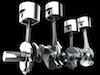
Join Date: Oct 2007
Location: Oregon City, OR, USA
Posts: 1,745
Likes: 0
Received 2 Likes
on
2 Posts
Re: (vinuneuro)
<TABLE WIDTH="90%" CELLSPACING=0 CELLPADDING=0 ALIGN=CENTER><TR><TD>Quote, originally posted by vinuneuro »</TD></TR><TR><TD CLASS="quote">The Japanese S model's ABS utilizes the ATTS' yaw-rate and lateral-acceleration sensors, and its electronic control unit interacts with the ATTS ECU, providing active braking control. Shibahata explains that it is an active vehicle stability system as employed by Mercedes Benz (Bosch VDC) and Toyota (VSC), except that it does not have a mechanical hydraulic pressure system. As long as the driver keeps pushing the brake pedal the system takes care of optimally modulating the individual brakes for maximum stability.</TD></TR></TABLE>
So digging up an old thread here, I know, but I've been looking for info on the "Active ABS" found on the Type S for a while now. According to this article then, is it just the ABS and ATTS control unit that are different from an SH? Or are there mechanical differences as well?
So digging up an old thread here, I know, but I've been looking for info on the "Active ABS" found on the Type S for a while now. According to this article then, is it just the ABS and ATTS control unit that are different from an SH? Or are there mechanical differences as well?
04-23-2008, 05:24 PM
#21
Honda-Tech Member
Thread Starter
Join Date: Oct 2003
Location: Chicago
Posts: 6,619
Likes: 0
Received 0 Likes
on
0 Posts
Re: (gstrudler)
<TABLE WIDTH="90%" CELLSPACING=0 CELLPADDING=0 ALIGN=CENTER><TR><TD>Quote, originally posted by gstrudler »</TD></TR><TR><TD CLASS="quote">
So digging up an old thread here, I know, but I've been looking for info on the "Active ABS" found on the Type S for a while now. According to this article then, is it just the ABS and ATTS control unit that are different from an SH? Or are there mechanical differences as well?</TD></TR></TABLE>
This is a huge geometry difference because the radius rod mounts differently at the subframe and connects to the knuckle instead of the lca. Also, front knuckle, uca, lca, subframe, hub are all different. So are the front/rear shocks and springs, front swaybar.
Did you not read this in the second article?
Shibahata returned to his old domain, suspension design, briefly. During this sojourn, he designed a new front suspension for high-power front-wheel-drive cars. The "double joint" suspension is adopted in the American SH and Japanese S coupe models in order to take full advantage of the greater steering feel, linearity and tremendous cornering power offered by ATTS. In place of the normal single pivot compliance bushing on the suspension's lower link, the double-pivot suspension has one pivot each for the trailing diagonal link and the lower I-arm. The geometry minimizes torque steer effects, and reduces longitudinal input load by as much as 14% and vertical load by 8%.
So digging up an old thread here, I know, but I've been looking for info on the "Active ABS" found on the Type S for a while now. According to this article then, is it just the ABS and ATTS control unit that are different from an SH? Or are there mechanical differences as well?</TD></TR></TABLE>
This is a huge geometry difference because the radius rod mounts differently at the subframe and connects to the knuckle instead of the lca. Also, front knuckle, uca, lca, subframe, hub are all different. So are the front/rear shocks and springs, front swaybar.
Did you not read this in the second article?
Shibahata returned to his old domain, suspension design, briefly. During this sojourn, he designed a new front suspension for high-power front-wheel-drive cars. The "double joint" suspension is adopted in the American SH and Japanese S coupe models in order to take full advantage of the greater steering feel, linearity and tremendous cornering power offered by ATTS. In place of the normal single pivot compliance bushing on the suspension's lower link, the double-pivot suspension has one pivot each for the trailing diagonal link and the lower I-arm. The geometry minimizes torque steer effects, and reduces longitudinal input load by as much as 14% and vertical load by 8%.
04-23-2008, 06:34 PM
#22

Join Date: Oct 2004
Location: Lawrence, KS
Posts: 834
Likes: 0
Received 0 Likes
on
0 Posts
Re: (vinuneuro)
<TABLE WIDTH="90%" CELLSPACING=0 CELLPADDING=0 ALIGN=CENTER><TR><TD>Quote, originally posted by vinuneuro »</TD></TR><TR><TD CLASS="quote">
This is a huge geometry difference because the radius rod mounts differently at the subframe and connects to the knuckle instead of the lca. Also, front knuckle, uca, lca, subframe, hub are all different. So are the front/rear shocks and springs, front swaybar.
Did you not read this in the second article?
Shibahata returned to his old domain, suspension design, briefly. During this sojourn, he designed a new front suspension for high-power front-wheel-drive cars. The "double joint" suspension is adopted in the American SH and Japanese S coupe models in order to take full advantage of the greater steering feel, linearity and tremendous cornering power offered by ATTS. In place of the normal single pivot compliance bushing on the suspension's lower link, the double-pivot suspension has one pivot each for the trailing diagonal link and the lower I-arm. The geometry minimizes torque steer effects, and reduces longitudinal input load by as much as 14% and vertical load by 8%.</TD></TR></TABLE>
That pretty much sums up why I can't do a Type SH swap into my 4th gen. Way to rain on my pipe dream, mixaphorically speaking.
This is a huge geometry difference because the radius rod mounts differently at the subframe and connects to the knuckle instead of the lca. Also, front knuckle, uca, lca, subframe, hub are all different. So are the front/rear shocks and springs, front swaybar.
Did you not read this in the second article?
Shibahata returned to his old domain, suspension design, briefly. During this sojourn, he designed a new front suspension for high-power front-wheel-drive cars. The "double joint" suspension is adopted in the American SH and Japanese S coupe models in order to take full advantage of the greater steering feel, linearity and tremendous cornering power offered by ATTS. In place of the normal single pivot compliance bushing on the suspension's lower link, the double-pivot suspension has one pivot each for the trailing diagonal link and the lower I-arm. The geometry minimizes torque steer effects, and reduces longitudinal input load by as much as 14% and vertical load by 8%.</TD></TR></TABLE>
That pretty much sums up why I can't do a Type SH swap into my 4th gen. Way to rain on my pipe dream, mixaphorically speaking.
04-23-2008, 06:43 PM
#23
Honda-Tech Member
Thread Starter
Join Date: Oct 2003
Location: Chicago
Posts: 6,619
Likes: 0
Received 0 Likes
on
0 Posts
Re: (M@)
<TABLE WIDTH="90%" CELLSPACING=0 CELLPADDING=0 ALIGN=CENTER><TR><TD>Quote, originally posted by M@ »</TD></TR><TR><TD CLASS="quote">
That pretty much sums up why I can't do a Type SH swap into my 4th gen. Way to rain on my pipe dream, mixaphorically speaking.</TD></TR></TABLE>
Heh, the suspension differences have absolutely nothing to do with ATTS. Even still ATTS wouldn't work even in a Base model 5g because of the electrical and electronic reasons.
Just get a quaife for your 4g, they're pretty damn good.
That pretty much sums up why I can't do a Type SH swap into my 4th gen. Way to rain on my pipe dream, mixaphorically speaking.</TD></TR></TABLE>
Heh, the suspension differences have absolutely nothing to do with ATTS. Even still ATTS wouldn't work even in a Base model 5g because of the electrical and electronic reasons.
Just get a quaife for your 4g, they're pretty damn good.
04-23-2008, 06:48 PM
#24
Honda-Tech Member
Join Date: Oct 2007
Location: Oregon City, OR, USA
Posts: 1,745
Likes: 0
Received 2 Likes
on
2 Posts
Re: (vinuneuro)
Sorry Vin, I guess I wasn't clear. I have an SH and am simply looking to add the Active ABS that the Type S has (which the SH doesn't). According to the press release, it uses the same sensors that the ATTS system is using (which obviously the SH has)...
04-23-2008, 07:21 PM
#25
Honda-Tech Member
Thread Starter
Join Date: Oct 2003
Location: Chicago
Posts: 6,619
Likes: 0
Received 0 Likes
on
0 Posts
Re: (gstrudler)
<TABLE WIDTH="90%" CELLSPACING=0 CELLPADDING=0 ALIGN=CENTER><TR><TD>Quote, originally posted by gstrudler »</TD></TR><TR><TD CLASS="quote">Sorry Vin, I guess I wasn't clear. I have an SH and am simply looking to add the Active ABS that the Type S has (which the SH doesn't). According to the press release, it uses the same sensors that the ATTS system is using (which obviously the SH has)...</TD></TR></TABLE>
The Type S uses the same stuff as the SH, but I'm not so sure that Type S abs control unit would work. When people have done a Type S engine swap and used the swap's atts unit, the usdm control unit threw codes.
Plus, who cares about active abs. The only time I ever need abs is in snow..sometimes.
The Type S uses the same stuff as the SH, but I'm not so sure that Type S abs control unit would work. When people have done a Type S engine swap and used the swap's atts unit, the usdm control unit threw codes.
Plus, who cares about active abs. The only time I ever need abs is in snow..sometimes.